
14 Oct

Should You Split One Property Into Multiple Replacement Properties?
Splitting one appreciated property into multiple replacement properties may help diversify a portfolio, but it can also increase complexity. This article explains what investors should review.
07 Oct

How Concentration Risk Affects Real Estate Investors
Concentration risk can affect real estate investors when too much wealth depends on one property, market, tenant type, or strategy. This article explains what to review before an exchange.
30 Sep

Should You Consolidate Multiple Rentals Into One Better Property?
Some investors use a 1031 exchange to consolidate several smaller rentals into one stronger property. This article explains when consolidation may help and what risks to review.
23 Sep
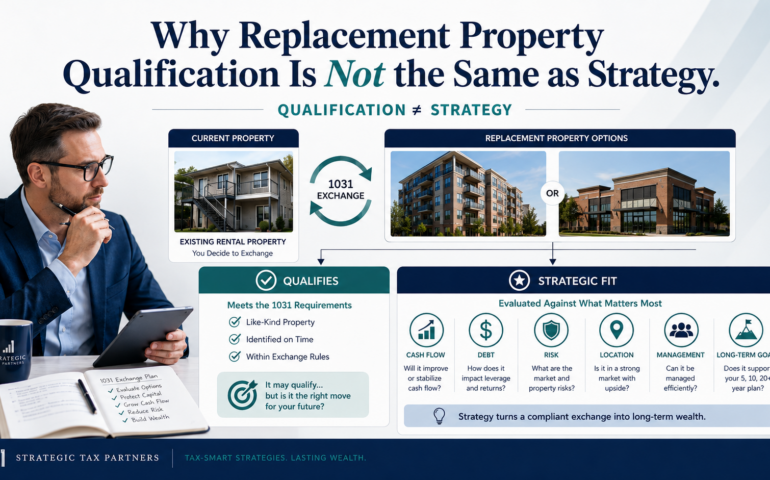
Why Replacement Property Qualification Is Not the Same as Strategy
A replacement property can qualify for a 1031 exchange but still be the wrong financial choice. This article explains why qualification and strategy are not the same.
16 Sep

What Should Your Replacement Property Actually Do?
A replacement property should do more than satisfy 1031 exchange rules. This article explains how investors can define the purpose of the next property before choosing what to buy.
09 Sep
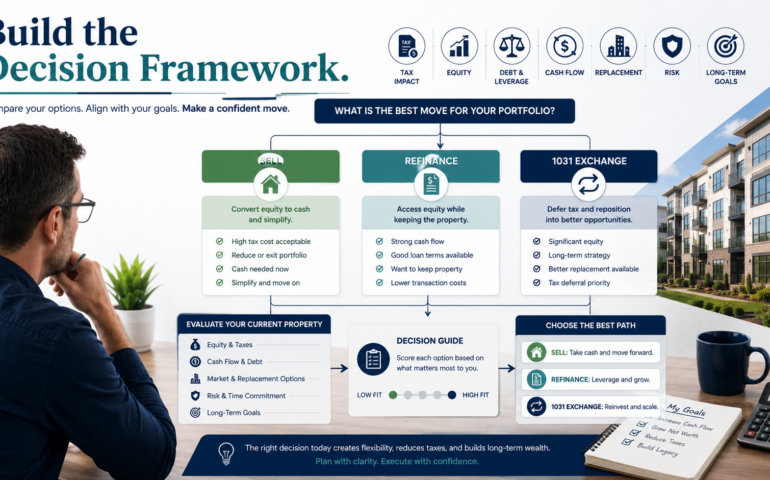
How to Build a Sell, Refinance, or Exchange Decision Framework
Before selling rental property, investors should compare selling, refinancing, and a 1031 exchange using a clear decision framework based on taxes, equity, debt, cash flow, risk, and goals.
02 Sep

When a 1031 Exchange Creates the Most Value
A 1031 exchange may be most valuable when tax deferral and investment strategy point in the same direction. This article explains what investors should review before choosing an exchange.
26 Aug
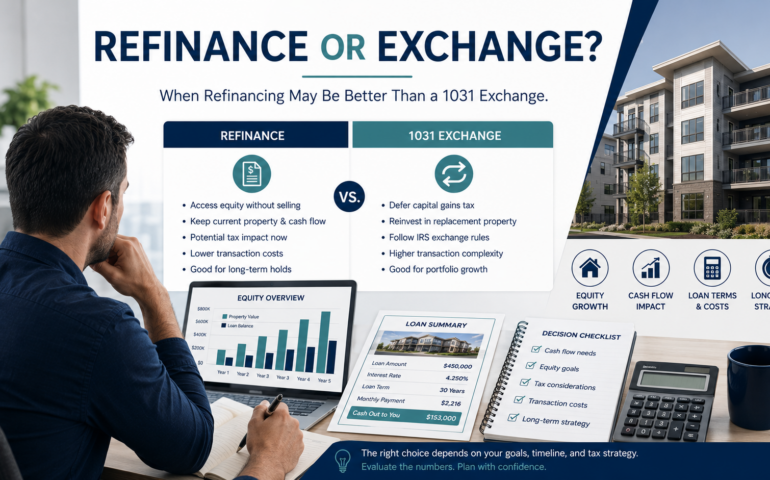
When Refinancing May Be Better Than a 1031 Exchange
Refinancing may be a better option than selling or exchanging when the property still fits the investor’s strategy. This article explains how to compare equity, debt, cash flow, and risk.
19 Aug

When Selling and Paying the Tax May Actually Make Sense
A 1031 exchange can be powerful, but it is not always the right answer. This article explains when selling rental property and paying the tax may be a reasonable strategic decision.
12 Aug

How to Evaluate Your Real Estate Portfolio Before an Exchange
Before a 1031 exchange, investors should review the whole real estate portfolio, not just the property being sold. This article explains what to evaluate before choosing a replacement property strategy.