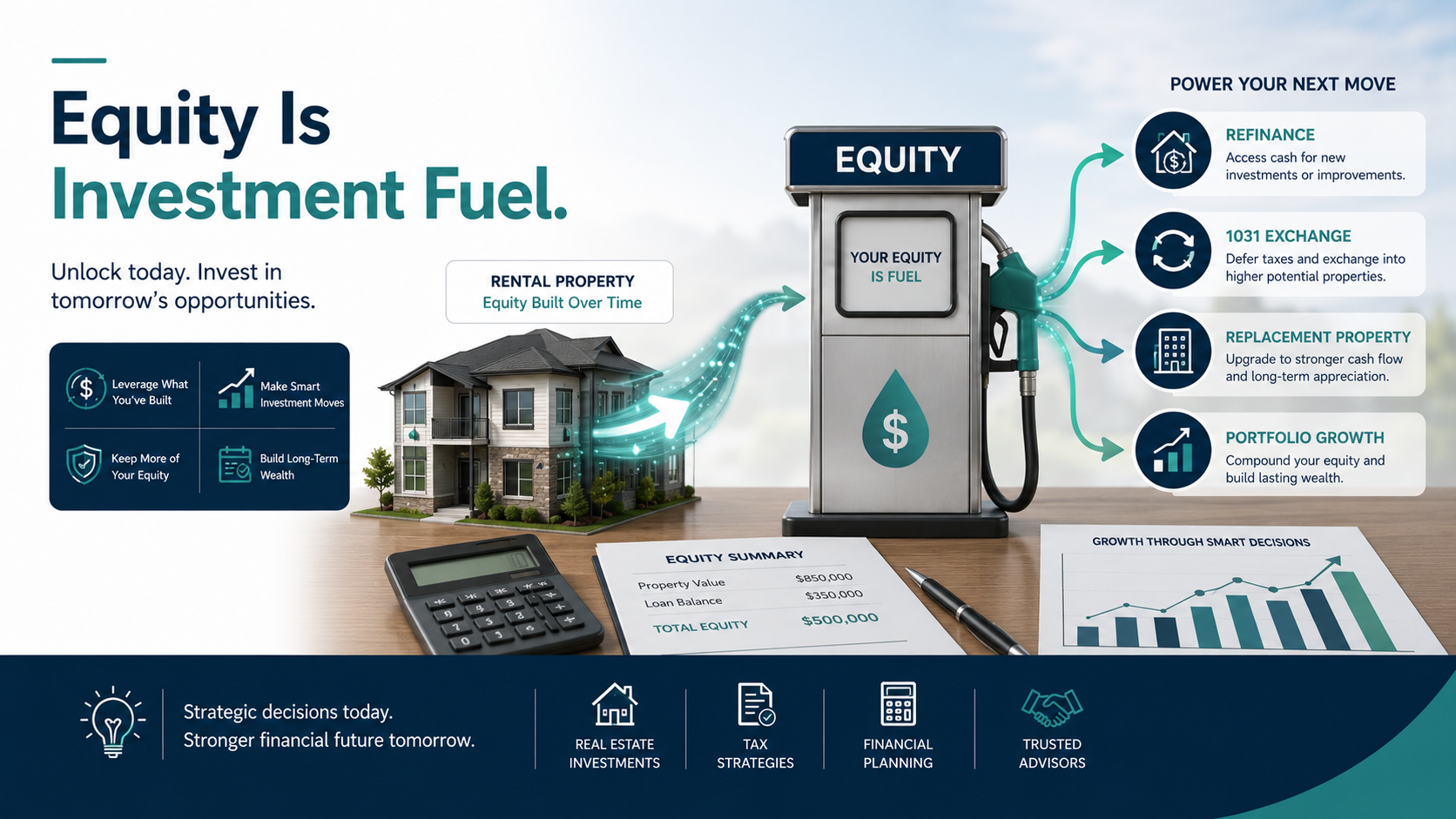
Rental property equity is not just paper profit. For a real estate investor, equity can become investment fuel.
The question is whether that equity should stay where it is, be accessed through refinancing, be converted to cash through a sale, or be redeployed through a 1031 exchange.
Key question: What job should your equity do next?
Equity Can Sit Still or Move
As a rental property appreciates and debt is paid down, equity can build inside the property. But equity does not automatically mean the property is still the best use of capital.
Some properties have large equity but modest cash flow. Others have strong appreciation but high management burden. Some properties performed well in the past but no longer fit the investor’s future goals.
Four Ways to Think About Equity
Before choosing a strategy, an investor should understand the available paths:
- Keep the equity in the current property if the asset still fits the plan.
- Refinance if the property still works but the investor wants access to capital.
- Sell if liquidity, simplicity, or a full exit matters more than staying invested.
- Exchange if the investor wants to keep capital working in real estate through replacement property.
Equity Should Have a Purpose
Strategic investors do not just ask, “How much equity do I have?” They ask, “What should this equity accomplish next?”
That purpose may include:
- Buying a stronger replacement property.
- Increasing cash flow.
- Diversifying into more than one property.
- Reducing management burden.
- Improving long-term appreciation potential.
- Preparing for retirement income.
- Simplifying future family ownership.
Planning point: Equity without a plan can become trapped capital. Before selling or refinancing, compare what the equity is doing now against what it could do elsewhere.
Return on Equity Matters
Many landlords measure a rental by monthly cash flow. That is useful, but it may not tell the whole story.
If a property has a large amount of equity but produces limited net cash flow, the return on equity may be lower than the investor assumes. That does not automatically mean the property should be sold, but it does mean the investor should review the numbers.
Equity and a 1031 Exchange
A 1031 exchange may allow an investor to redeploy equity into replacement property while deferring gain if the transaction qualifies and is structured properly.
For investors who want to stay in real estate, the exchange may help preserve more buying power for the next asset.
But the replacement property still has to make sense. The goal is not simply to move equity. The goal is to move equity into a better-fitting strategy.
Learn How to Think Through Equity, Taxes, and 1031 Strategy
The AssetWise Institute course helps landlords compare selling, refinancing, and exchanging before making a major rental property decision.
View the 1031 Exchange Strategy CourseNeed a Tool to Compare Options?
Planning tools can help investors organize property value, debt, estimated taxes, refinance assumptions, exchange buying power, and replacement property options.
Looking for 1031 exchange calculators and templates?
Final Takeaway
Rental property equity should not be viewed only as profit. It is capital that can stay, move, be borrowed against, or be redeployed.
The right strategy depends on tax exposure, debt, risk, cash flow, replacement options, retirement goals, and what the investor wants the next phase of the portfolio to do.
Important Educational Disclaimer
This article is for general educational purposes only and does not provide tax, legal, financial, investment, lending, real estate, or qualified intermediary advice. 1031 exchange rules are complex and time-sensitive. Before selling, refinancing, exchanging, identifying replacement property, changing ownership structure, or making any tax or investment decision, consult your own CPA, tax advisor, attorney, qualified intermediary, lender, financial advisor, and real estate professionals.
Official references: IRS Like-Kind Exchanges Real Estate Tax Tips and IRS Instructions for Form 8824.