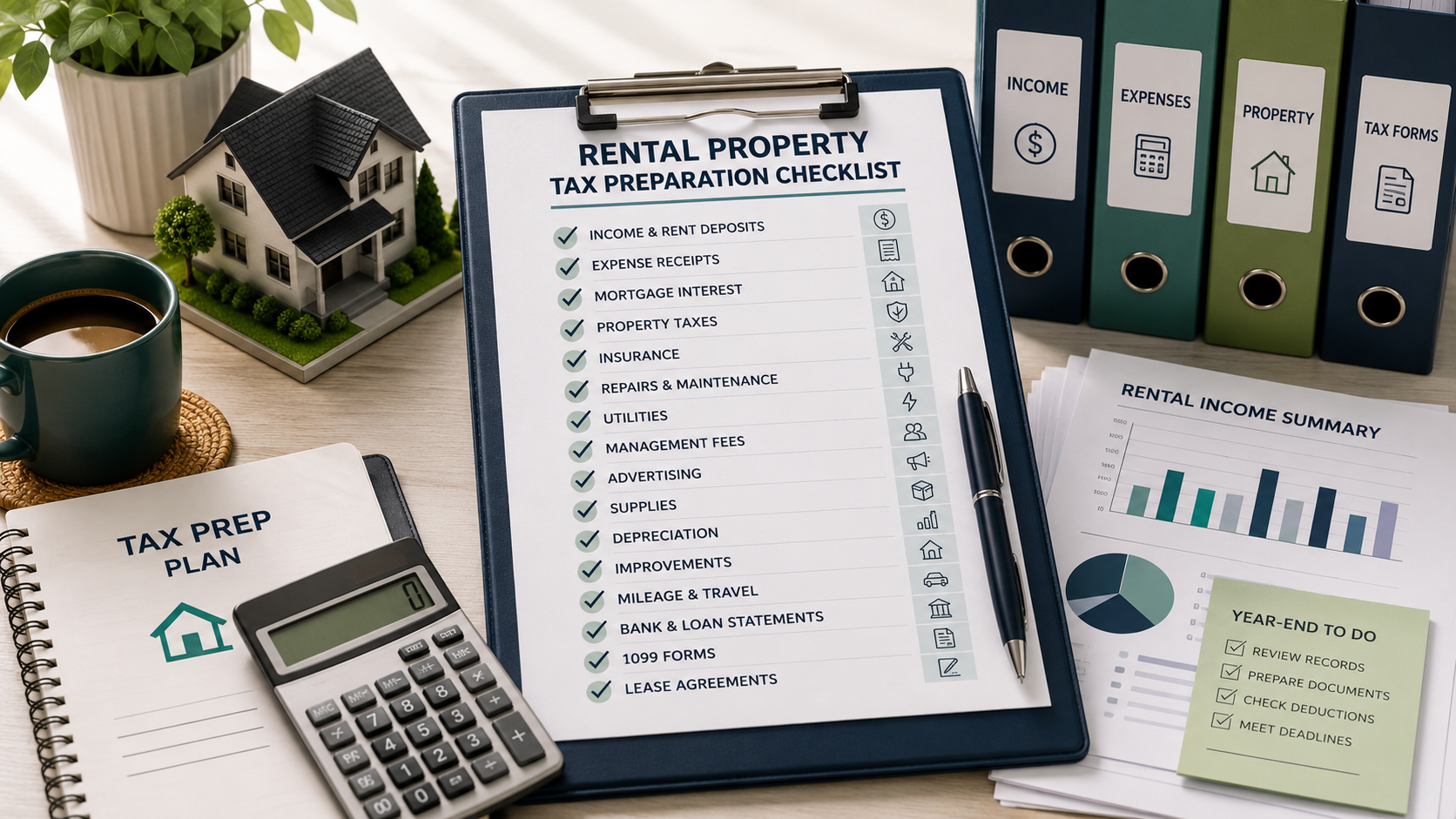
Rental Property Tax Preparation Checklist for Landlords and Real Estate Investors
Rental property tax preparation is easier when income, expenses, mortgage records, depreciation schedules, repairs, improvements, and bookkeeping reports are organized before filing.
This checklist helps landlords, Airbnb owners, short-term rental owners, and real estate investors understand what to gather before the return is prepared.
Quick Summary
A rental property tax preparation checklist should help you organize the records your tax preparer needs to report rental activity clearly.
- Rental income and deposits
- Mortgage interest and property taxes
- Insurance, utilities, repairs, and supplies
- Depreciation schedules and improvement records
- Airbnb or platform reports, if applicable
- Bookkeeping reports and bank records
Why a Rental Tax Checklist Matters
Rental property returns often require more than a simple profit and loss report. Your tax preparer may need income details, expense support, mortgage documents, property tax bills, insurance records, repair invoices, improvement records, depreciation schedules, and prior-year tax information.
When these items are organized before filing, it is easier to identify missing records, ask better questions, and review whether the return reflects the rental activity accurately.
Start With Property-by-Property Organization
If you own more than one rental property, organize records separately for each property. Combining all rental activity into one folder or spreadsheet can create confusion during tax preparation.
Each property may have different rent amounts, mortgage interest, property taxes, insurance, repairs, improvements, depreciation, and personal-use considerations. A property-by-property approach makes the review cleaner.
Rental Income Records to Gather
Start with the records that show how much rental income was received or earned during the year. This may include tenant rent payments, platform payouts, property management reports, security deposit activity, and tenant reimbursements.
Free Checklist: Review Rental Property Tax Savings Before Filing
Use the free Rental Property Tax Savings Checklist to organize income, expenses, depreciation, repairs, improvements, and tax records before your rental return is prepared.
Expense Records to Gather for Rental Tax Preparation
Rental expenses should be supported by receipts, invoices, statements, canceled checks, bank records, or bookkeeping reports. Good records help separate ordinary rental expenses from personal expenses, capital improvements, or owner transfers.
| Expense Category | Records to Gather | Review Notes |
|---|---|---|
| Mortgage Interest | Form 1098, loan statements, escrow statements | Separate interest, principal, property taxes, and insurance. |
| Property Taxes | County tax bills, escrow statements, payment confirmations | Confirm the correct property and tax period. |
| Insurance | Landlord policy, STR coverage, liability policy, invoices | Separate prepaid amounts and escrow payments when needed. |
| Repairs and Maintenance | Contractor invoices, receipts, service records | Review whether large items are repairs or improvements. |
| Utilities | Electric, water, gas, internet, trash, sewer statements | Watch for tenant reimbursements or personal-use allocations. |
| Professional Fees | Tax, bookkeeping, legal, property management, consulting invoices | Keep invoices tied to the rental activity. |
| Supplies | Receipts for cleaning, maintenance, guest supplies, small tools | Separate recurring supplies from larger assets. |
Depreciation and Basis Records to Review
Depreciation is one of the most important areas to review for rental property owners. Your tax preparer may need the purchase price, closing statement, land and building allocation, improvement records, furniture purchases, appliance purchases, and prior-year depreciation schedules.
If a rental property was purchased, converted to rental use, renovated, furnished, or improved, depreciation records should be reviewed before filing.
Depreciation Records to Gather
- Closing disclosure or settlement statement
- Purchase agreement and appraisal, if available
- Land and building allocation support
- Prior-year depreciation schedules
- Major improvement invoices
- Furniture, appliance, and equipment purchase records
- Placed-in-service dates for new assets
- Records of assets removed, replaced, sold, or abandoned
Repairs vs Improvements Checklist
Large repair and maintenance expenses deserve special attention. Some costs may be ordinary repairs, while others may be capital improvements that need to be added to basis or depreciated over time.
Airbnb and Short-Term Rental Records
Short-term rental owners may need additional records because platform payouts, guest fees, cleaning charges, refunds, occupancy-related charges, supplies, furniture, and personal-use days can affect the review.
Gather platform summaries, payout reports, reservation reports, 1099-K records, cleaning invoices, supply receipts, guest refund details, and a calendar showing rental days, personal-use days, and maintenance blocks.
For more support, visit our Airbnb & Short-Term Rental Tax Services page.
Bookkeeping Reports to Prepare
If you use bookkeeping software, spreadsheets, or property management reports, make sure the reports are clean enough for tax preparation. A profit and loss report is helpful, but it may not be enough by itself.
Helpful Reports for Rental Tax Preparation
- Profit and loss report by property
- Bank reconciliation reports
- General ledger or transaction detail
- Mortgage payment breakdown
- Owner contribution and draw detail
- Repair and improvement detail
- Security deposit activity
- Property management year-end statement
- Short-term rental platform summary, if applicable
Need Help Preparing Rental Property Taxes?
Small Business Accounting Inc. provides remote tax and accounting services nationwide for landlords, Airbnb owners, short-term rental owners, real estate investors, commercial property owners, and property managers.
If your rental records include depreciation questions, messy books, missing receipts, platform payouts, repairs, improvements, or multiple properties, a focused rental tax preparation review may help organize the filing process.
When a Tax Savings Review May Help
A tax savings review may be helpful if the rental property has missing depreciation, unclear land allocation, major improvements, new furniture or appliances, possible cost segregation questions, or prior-year records that do not match the current books.
Learn more about our Real Estate Depreciation & Tax Savings Review service.
When Bookkeeping Cleanup Should Come First
If the books are not tax-ready, cleanup may be the first step. Cleanup can help organize rent deposits, mortgage payments, repairs, improvements, owner transfers, security deposits, property management statements, and short-term rental activity.
For help organizing rental records, visit our Rental Property Bookkeeping Cleanup page.
Related Real Estate Tax Services
Depending on your rental property records and filing needs, these related services may be helpful:
- Rental Property Tax Preparation
- Real Estate Tax & Accounting
- Rental Property Bookkeeping Cleanup
- Real Estate Depreciation & Tax Savings Review
- Airbnb & Short-Term Rental Tax Services
- Cost Segregation Tax Planning
- 1031 Exchange Tax Planning
Small Business Accounting Inc. does not prepare engineering-based cost segregation studies in-house. When a formal cost segregation study is appropriate, the firm can help clients understand the tax impact, coordinate with a qualified third-party provider, and properly use the final report for tax planning and filing.
Frequently Asked Questions
What documents do landlords need for tax preparation?
Landlords should gather rental income records, bank statements, mortgage interest statements, property tax bills, insurance records, repair invoices, improvement records, utility bills, depreciation schedules, and prior-year tax returns.
Do I need a separate checklist for each rental property?
Yes, it is usually best to organize records separately for each property. This helps keep income, expenses, repairs, improvements, depreciation, and personal-use details clear.
What if my rental books are messy?
If the books include uncategorized transactions, mixed personal expenses, unclear owner transfers, missing receipts, or combined properties, bookkeeping cleanup may be needed before tax preparation.
Should I include depreciation schedules with my tax documents?
Yes. Prior-year depreciation schedules are important because they help confirm basis, accumulated depreciation, current depreciation, and whether improvements or assets have been added correctly.
What records do Airbnb owners need for tax preparation?
Airbnb and short-term rental owners should gather platform payout reports, reservation summaries, 1099-K records, cleaning invoices, supply receipts, refund details, guest fee records, and a calendar showing rental and personal-use days.
When should I request rental tax preparation help?
Consider requesting help if you have multiple properties, depreciation questions, short-term rental activity, major improvements, messy books, missing records, or uncertainty about how to categorize income and expenses.
Final Step: Get Rental Records Tax-Ready Before Filing
A strong rental property tax preparation checklist helps you organize the records that matter most: income, expenses, mortgage interest, property taxes, repairs, improvements, depreciation, bookkeeping reports, and platform records.
Small Business Accounting Inc. can help rental property owners review records, prepare tax filings, and identify items worth discussing before filing.