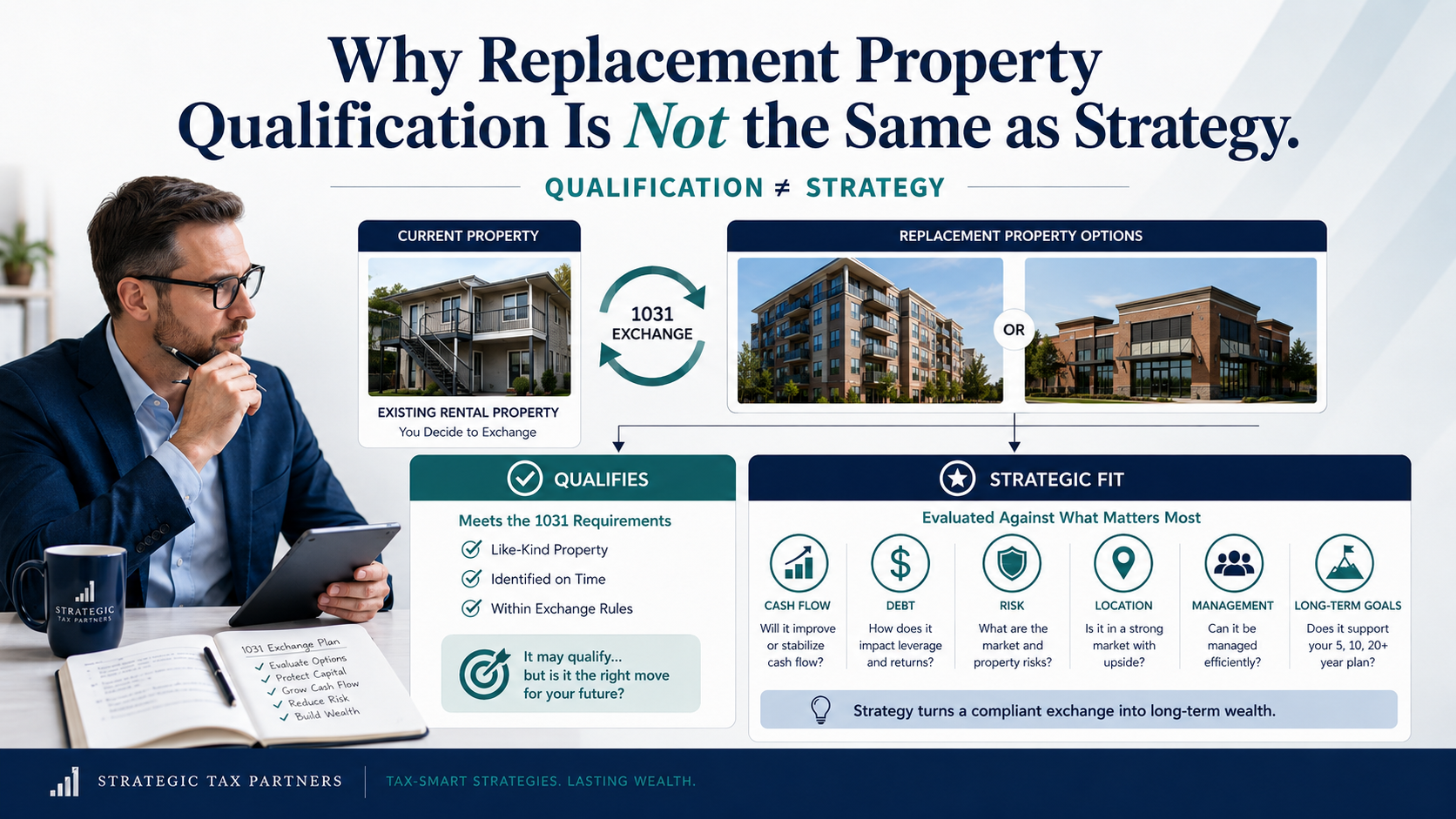
In a 1031 exchange, a replacement property can qualify technically and still be a poor strategic decision.
This is one of the most important distinctions real estate investors should understand before the 45-day identification deadline creates pressure.
Key idea: Qualification answers, “Can this property work for the exchange?” Strategy asks, “Should this property be in my portfolio?”
Why Investors Confuse Qualification With Strategy
When a deadline is approaching, the investor’s focus often narrows. Instead of evaluating the quality of the next investment, the investor starts asking whether a property satisfies the basic exchange requirements.
That is understandable, but it can be risky. A property that fits the exchange rules may still have poor numbers, weak tenants, too much debt pressure, high repair exposure, or too much management burden.
What Qualification Does Not Tell You
Qualification does not tell you whether the property is a strong investment. It does not answer:
- Will the property produce dependable net cash flow?
- Is the purchase price reasonable for the market?
- Will debt service leave enough margin?
- Are repairs, insurance, property taxes, or reserves being underestimated?
- Will the investor have the time and energy to manage it?
- Does the property improve the overall portfolio?
The Real Strategy Test
The strategy test is simple: would you still want the replacement property if there were no tax deadline?
If the answer is no, the investor should slow down and ask whether the exchange is controlling the decision too much.
Planning warning: Tax deferral should not be used to justify a weak property. A bad replacement asset can create years of financial and management problems.
Look Beyond the Purchase Price
A replacement property should be reviewed based on more than purchase price. Investors should also review financing, cash flow, rent assumptions, tenant quality, reserves, insurance, repairs, local rules, management burden, and exit options.
Those factors often determine whether the property helps or hurts the investor after the exchange closes.
Strategy Should Come Before Identification
The strongest exchange planning begins before the investor is rushing to identify property. That gives the investor time to define what type of property fits the next stage of the portfolio.
Once the strategy is clear, the investor can evaluate each potential replacement property against that strategy instead of reacting to deadline pressure.
Build a Replacement Property Strategy Before the Deadline
The AssetWise Institute course helps investors understand replacement property strategy, exchange execution risk, tax coordination, retirement income planning, and long-term portfolio decisions.
View the 1031 Exchange Strategy CourseUse Tools to Compare Property Fit
Replacement property tools can help investors compare properties based on income, expenses, debt, holding costs, risk, concentration, and management fit.
Looking for 1031 replacement property tools?
Final Takeaway
Replacement property qualification is not the same as replacement property strategy. Investors need both technical review and investment judgment.
Before identifying property, ask whether the property supports the portfolio you actually want to own after the exchange.
Important Educational Disclaimer
This article is for general educational purposes only and does not provide tax, legal, financial, investment, lending, real estate, or qualified intermediary advice. 1031 exchange rules are complex and time-sensitive. Before selling, refinancing, exchanging, identifying replacement property, changing ownership structure, or making any tax or investment decision, consult your own CPA, tax advisor, attorney, qualified intermediary, lender, financial advisor, and real estate professionals.
Official references: IRS Like-Kind Exchanges Real Estate Tax Tips and IRS Instructions for Form 8824.