Rental Property Improvements: How to Track Renovations for Tax Preparation
Rental property renovations can create valuable records for tax preparation, but only if the expenses are tracked clearly. Contractor invoices, materials, permits, appliances, repairs, and improvement costs should not all be placed into one vague bookkeeping category.
Before filing, landlords and real estate investors should organize renovation records so their tax preparer can review which costs may be current repairs, which may be capital improvements, and which may need to be added to depreciation schedules.
Quick Summary
Renovation tracking helps rental owners organize project costs before tax preparation so repairs, improvements, assets, and depreciation items can be reviewed clearly.
- Separate repairs from capital improvements
- Keep contractor invoices and receipts by project
- Track materials, labor, permits, and design costs
- Record placed-in-service dates for new assets
- Update depreciation schedules when needed
- Keep before-and-after renovation records
Why Renovation Tracking Matters
A renovation project may include several tax categories at the same time. One invoice may include repair work, new materials, appliance replacement, building improvements, cleanup, and labor. Without detail, it can be difficult to review the proper tax treatment.
Good tracking does not guarantee a deduction or tax savings, but it can help support better tax preparation, cleaner bookkeeping, and more accurate depreciation records.
Start With a Project-by-Project Renovation File
Instead of saving all receipts in one folder, create a separate file for each rental property renovation project. For example, a kitchen remodel, bathroom renovation, flooring replacement, roof project, HVAC replacement, or exterior improvement should each have its own records.
A project-by-project approach makes it easier to see what was repaired, what was improved, what was replaced, and when the work was completed.
Renovation Records to Keep Before Tax Preparation
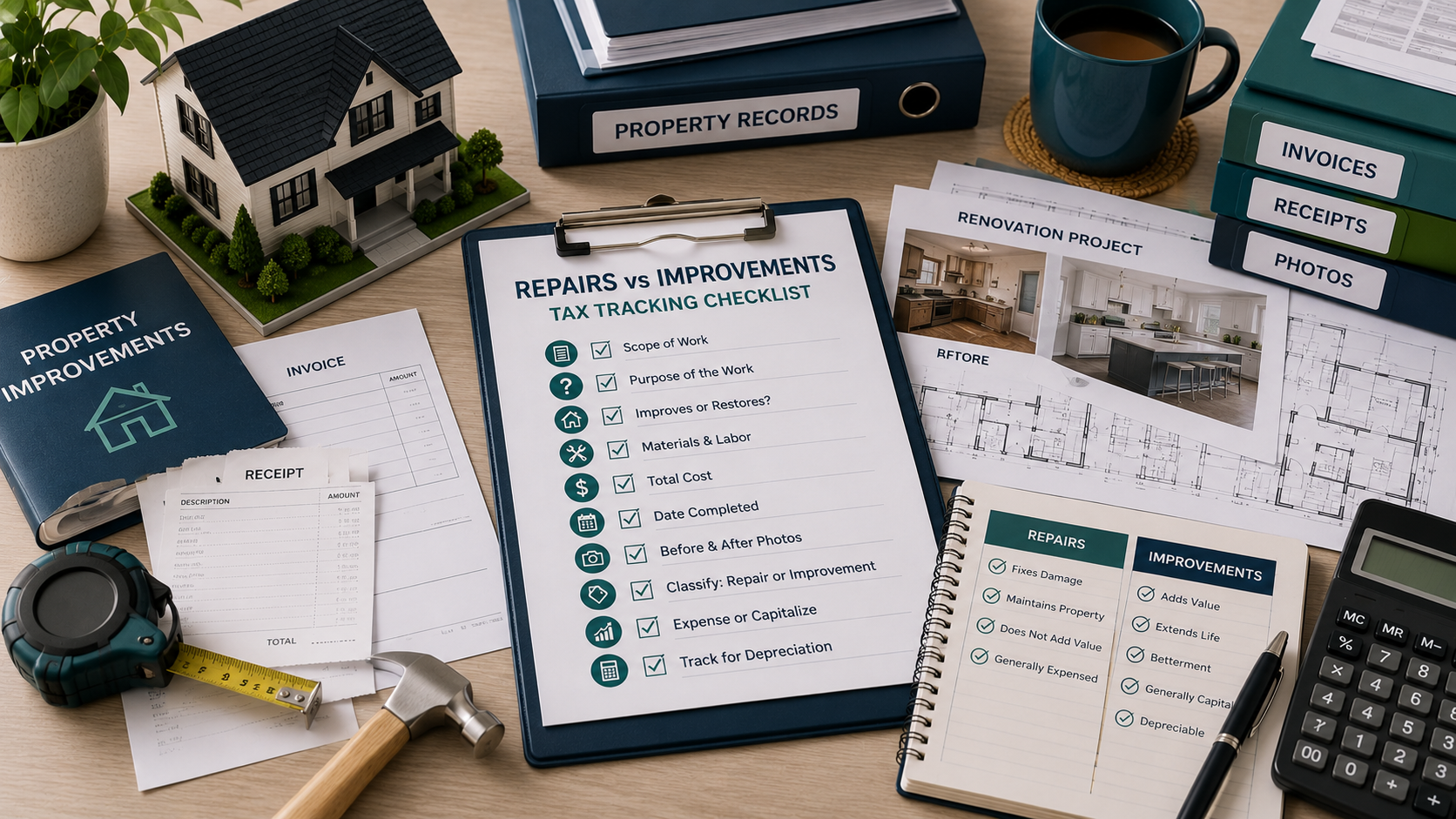
The best renovation records show what work was performed, where it was performed, why it was done, when it was completed, and how much each part of the project cost.
Free Checklist: Review Rental Property Tax Savings Before Filing
Renovations can affect repairs, improvements, depreciation, basis, and tax planning. Use the free Rental Property Tax Savings Checklist to organize records worth reviewing before tax preparation.
Repairs vs Improvements: Why the Details Matter
A repair generally keeps the rental property in ordinary operating condition. An improvement may make the property better, restore a major component, or adapt the property to a new or different use.
Renovation projects often include both. For example, a bathroom project may include fixing a plumbing issue, replacing damaged drywall, installing new fixtures, upgrading tile, and improving the overall layout. Those details matter for tax preparation.
| Project Item | Possible Category | What to Track |
|---|---|---|
| Fixing a small leak | May be repair | Invoice details, location, cause of repair, and payment record |
| Replacing an entire roof | Often improvement | Contract, materials, warranty, placed-in-service date, and total project cost |
| Replacing one broken appliance part | May be repair | Service invoice and part description |
| Buying a new appliance | May be depreciable asset | Receipt, cost, date placed in service, and property location |
| Full kitchen remodel | Often improvement | Separate cabinets, counters, appliances, labor, design, permits, and materials |
| Painting after tenant turnover | May need review | Whether it was routine maintenance or part of a larger renovation |
Track Labor, Materials, Permits, and Professional Fees Separately
Renovation invoices are often broad. If a contractor gives one lump-sum invoice, ask whether they can provide details by project component. Separating costs can help your tax preparer understand whether the work relates to repairs, improvements, appliances, land improvements, or other assets.
For larger projects, consider keeping a simple renovation summary showing the project name, property address, vendor, cost, payment date, project description, and completion date.
Helpful Cost Categories
- Labor
- Materials
- Permits and inspections
- Architecture, design, or engineering fees
- Appliances and equipment
- Furniture and fixtures
- Cleanup and disposal
- Repairs discovered during the project
- Capital improvements or upgrades
Placed-in-Service Dates Matter
For depreciation purposes, timing matters. Rental owners should track when an improvement, appliance, furniture package, or other asset was ready and available for use in the rental activity.
This is especially important when the renovation spans multiple months, when the property is unavailable for rent during construction, or when some assets are installed before others.
How Renovations Affect Depreciation Records
Renovation tracking connects directly to depreciation. If a project is a capital improvement or includes depreciable assets, the cost may need to be added to the depreciation schedule instead of being treated as a current repair expense.
Depreciation records may need to show the asset description, cost, date placed in service, recovery period, and prior-year depreciation. Missing or vague renovation records can affect tax preparation for years.
Depreciation Items to Review
- Building improvements
- Appliance replacements
- Furniture and fixtures
- Flooring, cabinets, counters, and built-ins
- HVAC, roof, electrical, and plumbing projects
- Exterior improvements and land improvements
- Assets removed, replaced, sold, or abandoned
Need Help Reviewing Renovation Costs Before Filing?
Small Business Accounting Inc. helps landlords, Airbnb owners, short-term rental owners, real estate investors, commercial property owners, and property managers review rental property records before tax preparation.
If your renovation records include contractor invoices, repairs, improvements, appliances, depreciation questions, or bookkeeping cleanup issues, a focused tax savings review may help organize the details before filing.
When Bookkeeping Cleanup Should Come First
If renovation expenses were all coded to repairs, supplies, construction, miscellaneous, or owner draws, bookkeeping cleanup may be needed before tax preparation.
Cleanup can help separate property-level expenses, owner transfers, contractor payments, capital improvements, repairs, reimbursements, and assets that may need to be added to depreciation schedules.
For help organizing rental records, visit our Rental Property Bookkeeping Cleanup page.
Cost Segregation Considerations for Major Renovations
Larger renovation projects may raise cost segregation planning questions, especially for commercial properties, short-term rentals, or real estate investors with significant building improvements.
Cost segregation is not appropriate for every property, and the benefit depends on the property, income, tax position, improvement details, future plans, and supporting documentation.
Small Business Accounting Inc. does not prepare engineering-based cost segregation studies in-house. When a formal cost segregation study is appropriate, the firm can help clients understand the tax impact, coordinate with a qualified third-party provider, and properly use the final report for tax planning and filing.
Learn more on our Cost Segregation Tax Planning page.
Related Rental Property Tax Services
Depending on your records and filing needs, these related services may be helpful:
Frequently Asked Questions
How should landlords track renovation expenses?
Landlords should track renovation expenses by property and by project. Keep contractor invoices, receipts, permits, payment records, project descriptions, completion dates, and notes explaining what work was performed.
Are rental property renovations deductible?
Some renovation-related costs may be repairs, but many larger renovation costs may be improvements that need to be capitalized and depreciated. The treatment depends on the facts and the type of work performed.
What is the difference between repairs and improvements?
Repairs generally keep the property in ordinary operating condition. Improvements may make the property better, restore a major component, or adapt the property to a new or different use.
Why do placed-in-service dates matter?
The placed-in-service date helps determine when depreciation may begin for a new asset or improvement. It is generally tied to when the asset is ready and available for rental use, not simply when it was paid for.
What if all renovation costs were coded to repairs?
If all renovation costs were coded to repairs, the records should be reviewed before filing. Some items may need to be reclassified as improvements, depreciable assets, or other categories depending on the facts.
When should I request a tax savings review?
Consider requesting a review if you completed renovations, replaced major systems, bought appliances, made improvements, have unclear depreciation records, or are not sure whether costs were properly categorized.
Final Step: Organize Renovation Records Before Tax Preparation
Rental property improvements can affect repairs, depreciation, basis, bookkeeping, and tax planning for years. Clean renovation records make it easier to review what happened and how the costs should be treated before filing.
Small Business Accounting Inc. can help rental property owners organize renovation records, review depreciation issues, and identify tax questions worth discussing before filing.