Before listing an appreciated rental property, a landlord should review more than the estimated sale price.
The listing decision can trigger tax, debt, cash flow, replacement property, retirement, and family planning questions. If those questions are not reviewed early, the investor may feel rushed later.
Best timing: Review the tax and strategy questions before the property is listed, not after a buyer is already under contract.
1. Review Your Estimated Tax Exposure
Start by estimating the potential tax result if you sell. This may include capital gain, depreciation recapture, state tax, and other possible tax effects depending on your facts.
You will likely need your original purchase information, improvement records, depreciation history, estimated selling price, debt payoff, and selling costs.
2. Review Your Debt and Equity
Before selling, understand how much debt is on the property and how much equity may remain after closing costs and taxes.
This matters because the amount of usable equity affects whether selling, refinancing, or exchanging is realistic.
3. Review the Property’s Current Performance
A property that increased in value may still have weak cash flow. Another property may have strong income but too much management burden.
Before listing, review:
- Gross rent and net cash flow.
- Repairs and maintenance trends.
- Vacancy risk.
- Insurance, property tax, and HOA costs.
- Management time and stress.
- Return on equity.
4. Review Whether You Actually Want to Exit Real Estate
Some investors want to sell because they are tired of the current property, not because they want to leave real estate entirely.
That distinction matters. If the investor still wants real estate exposure, refinancing or a 1031 exchange may need to be reviewed before committing to a taxable sale.
5. Review Replacement Property Options Early
If a 1031 exchange is being considered, replacement property strategy should begin before the sale process moves too far.
The investor should think about what the next property needs to do: produce more income, reduce management, diversify risk, support retirement, or create long-term growth.
Warning: A replacement property can qualify technically but still be the wrong fit financially. Do not wait until deadline pressure forces the decision.
6. Review the Professional Team
Before listing, consider whether you need to speak with a CPA, tax advisor, qualified intermediary, attorney, lender, financial advisor, real estate agent, or property manager.
Each professional may see a different part of the decision. The investor’s job is to coordinate the overall strategy before the transaction moves too quickly.
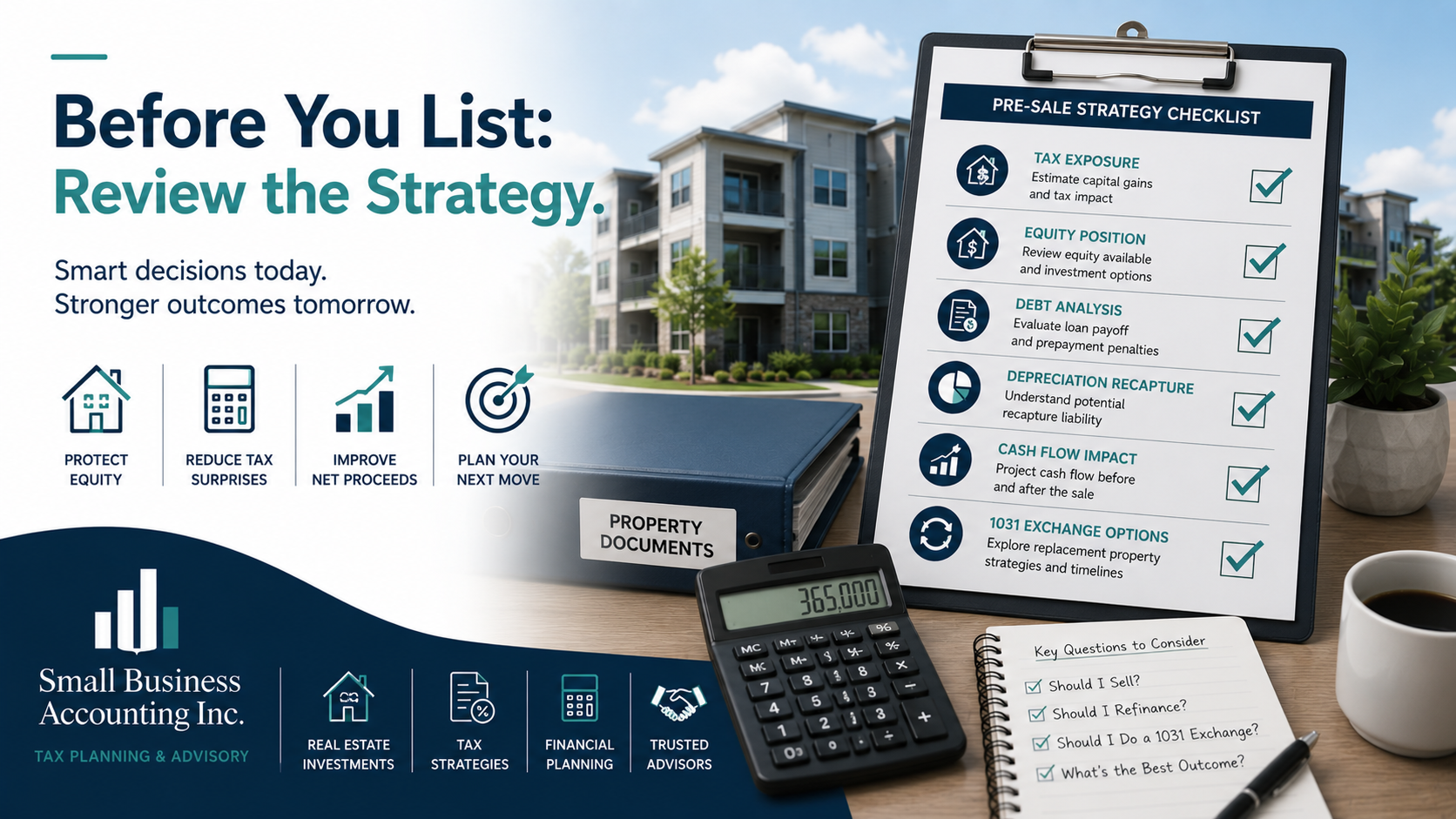
Pre-Listing Strategy Checklist
- Estimate tax exposure before listing.
- Review depreciation history and adjusted basis.
- Calculate debt payoff and estimated net proceeds.
- Compare selling, refinancing, and exchanging.
- Define what the equity should do next.
- Review current cash flow and management burden.
- Identify replacement property goals if exchanging.
- Talk to the right professional team before acting.
Thinking About Selling an Appreciated Rental?
The AssetWise Institute course helps real estate investors compare sell, refinance, and 1031 exchange options before making a major property decision.
View the 1031 Exchange Strategy CourseUse Tools to Organize the Review
Before listing, a planning workbook or calculator can help organize tax exposure, equity, debt, replacement property options, and professional questions.
Looking for 1031 planning templates?
Final Takeaway
Before listing an appreciated rental property, review the strategy first. The sale price matters, but it is not the whole decision.
The better question is whether selling, refinancing, or exchanging best supports the investor’s taxes, cash flow, equity, risk, lifestyle, and long-term goals.
Important Educational Disclaimer
This article is for general educational purposes only and does not provide tax, legal, financial, investment, lending, real estate, or qualified intermediary advice. 1031 exchange rules are complex and time-sensitive. Before selling, refinancing, exchanging, identifying replacement property, changing ownership structure, or making any tax or investment decision, consult your own CPA, tax advisor, attorney, qualified intermediary, lender, financial advisor, and real estate professionals.
Official references: IRS Like-Kind Exchanges Real Estate Tax Tips and IRS Instructions for Form 8824.