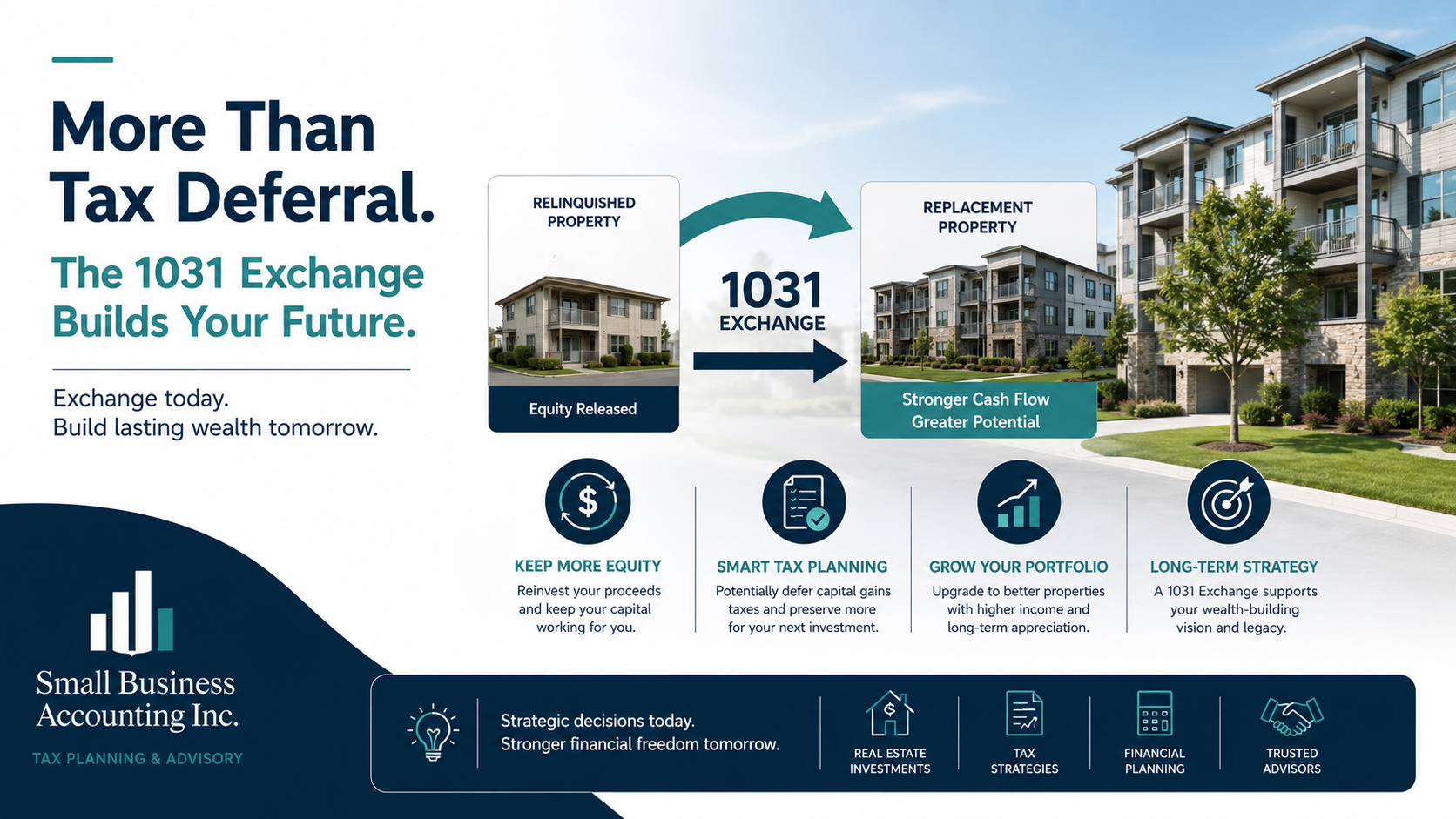
A 1031 exchange is often described as a way to defer tax. That description is true, but incomplete.
For real estate investors, a 1031 exchange can also be a way to keep equity working, reposition a portfolio, trade into better-aligned property, reduce concentration risk, and plan for the next stage of ownership.
Strategic idea: The exchange should not only answer “How do I delay tax?” It should answer “Where should this capital go next?”
Tax Deferral Is Only the Surface
Tax deferral can be valuable because it may allow more equity to stay invested. But if an investor focuses only on the tax benefit, they may buy a replacement property that qualifies technically but does not improve the portfolio.
A replacement property should solve a real investor problem. That may be poor cash flow, too much management, too much concentration in one market, or a need for better long-term growth.
What Strategic Investors Think About
Before starting an exchange, investors should think about the role of the next property.
- Should the next property produce more income?
- Should it have better appreciation potential?
- Should it reduce management burden?
- Should it diversify market or tenant risk?
- Should it support retirement or future family planning?
These questions help turn the exchange from a tax tactic into a real estate strategy.
Qualification Is Not the Same as Strategy
One of the biggest mistakes investors make is assuming that a replacement property is good simply because it qualifies for the exchange.
A property can meet the basic exchange requirements and still be a poor investment fit. It may have weak cash flow, too much debt risk, high repairs, poor tenant quality, or management issues that do not fit the investor’s goals.
Planning point: The goal is not to buy something only because the deadline is approaching. The goal is to identify replacement property that fits the investor’s larger plan.
How a 1031 Exchange Can Reposition a Portfolio
A 1031 exchange may allow an investor to move from one real estate position into another. Depending on the facts, an investor might use an exchange to:
- Trade up from a smaller rental into a larger asset.
- Consolidate several properties into one stronger property.
- Diversify one highly appreciated property into multiple investments.
- Move from high-management property toward lower-management property.
- Prepare a portfolio for retirement income or future family planning.
The Exchange Should Fit the Investor’s Life
A profitable property can still be the wrong property if it creates the wrong lifestyle. An investor in growth mode may choose differently than an investor approaching retirement.
That is why replacement property decisions should include more than purchase price and rent. They should include debt, reserves, owner time, risk, location, tenant type, and long-term goals.
Learn the Strategy Behind the 1031 Exchange
The AssetWise Institute course teaches 1031 exchanges as a real estate wealth strategy, including sell/refinance/exchange decisions, replacement property planning, execution risk, retirement, and legacy considerations.
View the 1031 Exchange Strategy CourseTools Can Help Turn Strategy Into Action
Investors often need more than a concept. They may need comparison worksheets, replacement property planners, deadline trackers, and advisor question packets.
Looking for 1031 exchange planning tools?
Final Takeaway
A 1031 exchange is more than a tax deferral rule. Used strategically, it can help investors keep capital working and reposition their real estate portfolio for the next stage.
The strongest exchange is not just the one that avoids immediate tax. It is the one that moves the investor closer to the right portfolio.
Important Educational Disclaimer
This article is for general educational purposes only and does not provide tax, legal, financial, investment, lending, real estate, or qualified intermediary advice. 1031 exchange rules are complex and time-sensitive. Before selling, refinancing, exchanging, identifying replacement property, changing ownership structure, or making any tax or investment decision, consult your own CPA, tax advisor, attorney, qualified intermediary, lender, financial advisor, and real estate professionals.
Official references: IRS Like-Kind Exchanges Real Estate Tax Tips and IRS Instructions for Form 8824.