Why Your Rental Depreciation Schedule May Need a Second Look
A rental depreciation schedule can look simple on the surface, but it may contain important details that affect tax preparation, future planning, repairs versus improvements, cost segregation readiness, and potential corrections. If you own a rental property, it is worth knowing what your depreciation schedule actually shows.
Quick Summary
Your rental depreciation schedule may need a second look if it does not clearly separate land from building value, does not list appliances or furniture separately when appropriate, does not include improvements, uses unclear placed-in-service dates, or does not match your closing statement, renovation records, or prior tax returns.
A depreciation review does not automatically mean something is wrong. It simply helps confirm whether the schedule is complete, properly supported, and useful for future tax planning.
Why Your Rental Depreciation Schedule Matters
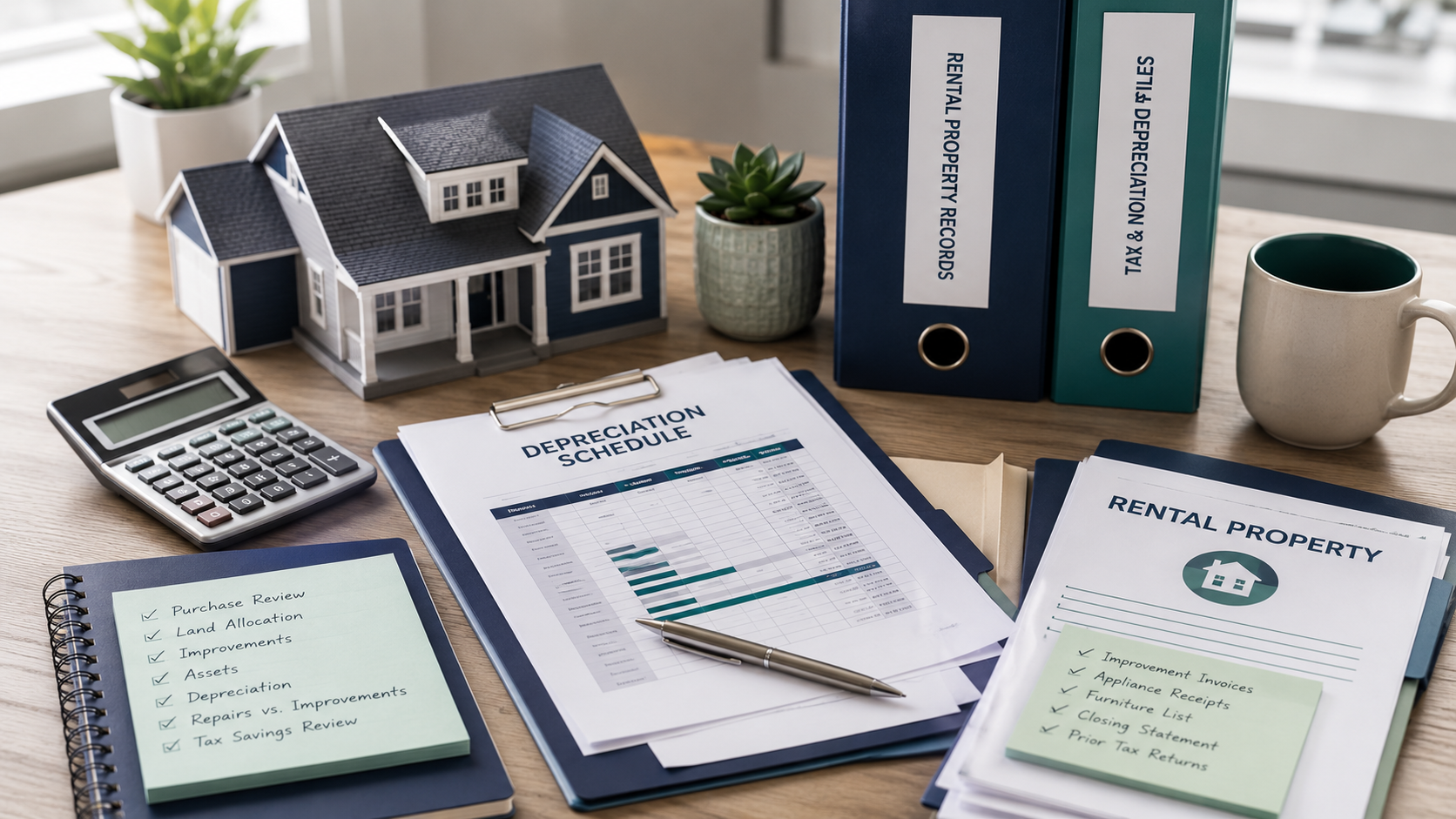
A depreciation schedule is more than a supporting worksheet. It is the record that helps show what property is being depreciated, when each asset was placed in service, how the cost was allocated, how much depreciation has already been claimed, and what may still be available in future years.
For rental property owners, this matters because depreciation affects annual tax reporting, future sale planning, depreciation recapture, cost segregation readiness, and whether prior-year issues may need to be reviewed. If the schedule is incomplete or too broad, it may be difficult to know whether the tax return tells the full story.
Small Business Accounting Inc. helps landlords, Airbnb owners, short-term rental owners, and real estate investors review rental depreciation, tax records, bookkeeping cleanup issues, and real estate tax planning opportunities.
Start With the Rental Property Tax Savings Checklist
Use the free checklist to review depreciation, land and building allocation, repairs versus improvements, cost segregation readiness, Airbnb tax issues, bookkeeping red flags, and missing documents.
Rental Depreciation Schedule Red Flags to Review
These red flags do not automatically mean the depreciation schedule is wrong. They simply show where a landlord may want a closer review before filing, amending, selling, refinancing, or planning a cost segregation study.
1. You Do Not Have a Depreciation Schedule
If you only have a tax return but no detailed depreciation schedule, it may be hard to verify what assets are being depreciated, when they were placed in service, and how prior depreciation was calculated.
2. Land and Building Were Not Clearly Separated
Land is generally not depreciated, while the building and certain qualifying assets may be depreciated over time. If your schedule does not clearly show a land value and building value, the basis allocation may need review.
3. Everything Is Listed as One Building Asset
A rental property may include more than the building itself. Depending on the facts, appliances, furniture, equipment, land improvements, and certain renovations may need separate review. A schedule that lists only one building asset may be too broad for planning purposes.
4. Improvements Are Missing From the Schedule
If you completed a roof replacement, remodel, HVAC replacement, flooring project, kitchen renovation, bathroom renovation, or major upgrade, the improvement may need to be reviewed for capitalization and depreciation.
5. Placed-in-Service Dates Are Unclear
The placed-in-service date can affect when depreciation begins. This date may be different from the purchase date, especially when a property was renovated, converted from personal use, or furnished before being available for rent.
6. Assets Were Replaced but the Old Assets Were Not Reviewed
When an appliance, roof, HVAC system, flooring, or other asset is replaced, the old asset may still appear on the depreciation schedule. This can create questions about dispositions, remaining basis, and whether the records reflect what actually exists.
7. The Schedule Does Not Match Your Bookkeeping Records
Your bookkeeping records may show improvements, furniture, appliances, or equipment that do not appear on the depreciation schedule. Or the depreciation schedule may show assets that are not supported by current records.
Land and Building Allocation: A Common Depreciation Review Issue
One of the first things to review on a rental depreciation schedule is whether land and building value were separated. The building may be depreciable, but land generally is not. If the entire purchase price was entered as building value, the depreciation may need a closer look.
A reasonable allocation often requires reviewing the closing statement, appraisal if available, property tax assessment, purchase records, and other supporting information. The review should also consider whether closing costs were added to basis, deducted, amortized, or treated another way depending on their nature.
Documents to Review
- Closing statement or settlement statement
- Purchase contract
- Property tax assessment
- Appraisal, if available
- Prior depreciation schedule
- Prior tax returns and workpapers
Questions to Ask
- Was land separated from the building?
- Was the building value reasonable?
- Were closing costs reviewed properly?
- Was the property converted from personal use?
- Was the property placed in service right away?
- Do prior returns match the current schedule?
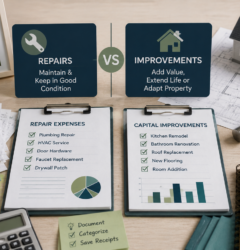
Appliances, Furniture, Repairs, and Improvements May Need Separate Review
A rental depreciation schedule may need a second look when large purchases or projects were grouped into one category. This is especially common when rental owners buy a property, make updates, furnish a short-term rental, or complete several projects before the property is available to rent.
| Item to Review | Why It Matters | Helpful Records |
|---|---|---|
| Appliances | May need separate depreciation review instead of being lumped into repairs or the building. | Receipts and placed-in-service dates |
| Furniture | Important for furnished rentals and STR properties where asset tracking may affect depreciation review. | Asset list and invoices |
| Flooring and Fixtures | May need review as repairs, improvements, building components, or separate assets depending on the facts. | Project invoices |
| Roof, HVAC, Plumbing, and Electrical Work | Major work may need capitalization and depreciation review rather than simple expense treatment. | Contractor detail |
| Kitchen or Bathroom Remodels | Often involve multiple components and may be part of a larger improvement project. | Scope of work and photos |
| Security Systems and Smart Locks | May need separate asset review, especially for short-term rentals. | Receipts and install dates |
| Outdoor Improvements | Items such as fencing, patios, landscaping, and outdoor amenities may need additional classification review. | Improvement records |
Not Sure Whether Your Depreciation Schedule Is Complete?
Small Business Accounting Inc. can help review your rental depreciation schedule, closing statement, asset records, improvements, repairs, bookkeeping, and cost segregation readiness before you decide the next step.
View the Tax Savings Review Contact Small Business Accounting Inc.
Why Airbnb and Short-Term Rental Depreciation Needs Extra Attention
Short-term rentals often involve more asset detail than a basic long-term rental. Furniture, appliances, linens, décor, smart locks, security devices, outdoor furniture, electronics, and guest-ready equipment may all need to be tracked carefully.
If these items were grouped into supplies, repairs, or one building asset, your depreciation schedule may not provide enough detail for a proper review. STR owners should also track personal use days, rental days, placed-in-service dates, and whether purchases were used exclusively for the rental activity.
For short-term rental-specific help, visit Airbnb & Short-Term Rental Tax Services.
Does a Depreciation Schedule Review Help With Cost Segregation Readiness?
Yes. A depreciation schedule review can be a useful first step before deciding whether to explore a formal cost segregation study. The review can help identify whether the existing schedule is too broad, whether major improvements were added correctly, whether assets are missing, and whether your records are strong enough for deeper planning.
Small Business Accounting Inc. does not prepare engineering-based cost segregation studies in-house. When a formal study is appropriate, the firm can help clients understand the tax impact, coordinate with a qualified third-party provider, and properly use the final report for tax planning and filing.
Cost Seg Readiness Signals
- You purchased a higher-value rental property
- You completed major renovations
- You own a furnished short-term rental
- You have detailed improvement invoices
- Your schedule lists only one building asset
- You want to review timing of depreciation deductions
Records That Help
- Depreciation schedule
- Closing statement
- Renovation invoices
- Photos and floor plans
- Furniture and appliance list
- Prior tax returns and bookkeeping reports
For more information, visit Cost Segregation Tax Planning.
Documents to Gather for a Rental Depreciation Schedule Review
A better depreciation review starts with better records. Gather these documents before requesting professional help.
| Document | Why It Helps | Review Area |
|---|---|---|
| Depreciation Schedule | Shows the current assets, cost basis, placed-in-service dates, recovery periods, and prior depreciation. | Core Review |
| Prior Tax Returns | Helps compare depreciation, passive losses, Schedule E activity, and carryovers. | Tax History |
| Closing Statement | Supports purchase price, closing costs, prorations, and basis review. | Basis |
| Property Tax Assessment or Appraisal | May help review land and building allocation support. | Land/Building |
| Improvement Invoices | Shows project detail, dates, vendors, and costs for capitalization review. | Improvements |
| Appliance and Furniture Receipts | Helps identify assets that may need separate review. | Asset Tracking |
| Bookkeeping Reports | Helps compare tax records to actual expenses, assets, and improvements. | Cleanup |
| Photos, Floor Plans, or Project Notes | Can support cost segregation readiness and improvement review. | Planning |
What If the Depreciation Schedule Has Errors?
If a depreciation issue is found, the next step depends on the facts. Some issues may be addressed through current-year tax preparation. Others may involve prior-year return review, amended return considerations, accounting method issues, or additional professional analysis.
This is not an area where rental owners should guess. Depreciation affects current deductions, future deductions, basis, potential recapture, and future sale reporting. A review should identify the issue, determine the years involved, and evaluate the appropriate correction path.
When to Request a Professional Depreciation Review
Consider a professional review if you do not have a depreciation schedule, your schedule only lists one building asset, you completed major renovations, you own a furnished short-term rental, you replaced major assets, or your tax return does not clearly match your records.
A review does not guarantee tax savings. It helps you understand whether your depreciation records are complete, supported, and ready for filing or planning.
View the Tax Savings Review Contact Small Business Accounting Inc.
Helpful Service Pages for Rental Property Owners
Depending on what your depreciation schedule shows, one of these service areas may be the best next step:
Tax Savings Review
For rental depreciation, repairs, improvements, cost segregation readiness, and rental property tax red flag review.
Rental Tax Preparation
For annual rental tax preparation involving Schedule E, depreciation, expenses, and rental reporting.
Rental Bookkeeping Cleanup
For messy books, uncategorized improvements, asset tracking issues, and property-level records.
Cost Segregation Planning
For readiness review when depreciation, building components, improvements, and potential study coordination need review.
Airbnb & STR Tax Services
For short-term rental depreciation, furniture tracking, 1099-K reporting, platform payouts, and STR tax questions.
Real Estate Tax & Accounting
For broader real estate tax and accounting support for landlords, investors, STR owners, and property owners.
Frequently Asked Questions
What is a rental depreciation schedule?
A rental depreciation schedule is a record that lists the depreciable assets connected to a rental property, including cost, placed-in-service dates, recovery periods, prior depreciation, and current depreciation. It helps support the depreciation claimed on the tax return.
Why would my rental depreciation schedule need a second look?
It may need review if land and building were not separated, improvements are missing, furniture and appliances were lumped together, placed-in-service dates are unclear, or the schedule does not match your closing statement, receipts, or bookkeeping records.
Can land be depreciated on a rental property?
Land is generally not depreciated. This is why rental owners should review whether the original purchase price was reasonably separated between land and building value.
What if I forgot to depreciate a rental property?
Missed depreciation should be reviewed carefully. The correct path depends on the tax years involved, prior returns, accounting method issues, and the facts of the property. It is best to request professional review before trying to fix it yourself.
Should Airbnb furniture and appliances be on the depreciation schedule?
They may need to be reviewed separately depending on the item, cost, use, placed-in-service date, and tax facts. Short-term rental owners should keep an asset list, receipts, and setup records for furniture, appliances, electronics, and equipment.
Can Small Business Accounting Inc. review my rental depreciation schedule?
Yes. Small Business Accounting Inc. helps rental property owners, Airbnb owners, landlords, and real estate investors review depreciation schedules, rental tax records, repairs, improvements, bookkeeping, and tax planning opportunities.
Ready to Review Your Rental Depreciation Schedule?
If your depreciation schedule is missing, too broad, unclear, or does not match your rental property records, Small Business Accounting Inc. can help you identify what needs a closer look.
Contact Small Business Accounting Inc. Download the Free Checklist
Disclaimer: This article is for general educational purposes only and does not provide legal, tax, accounting, investment, or engineering advice. Reading this article or contacting the firm does not create a client relationship. Tax results depend on each client’s facts and circumstances.