Short Term Rental Tax Review: Depreciation, Furniture, Supplies, and Platform Payouts
Short-term rentals can create more tax questions than traditional rentals because income, fees, supplies, furniture, cleaning costs, platform payouts, and depreciation details often come from several different places.
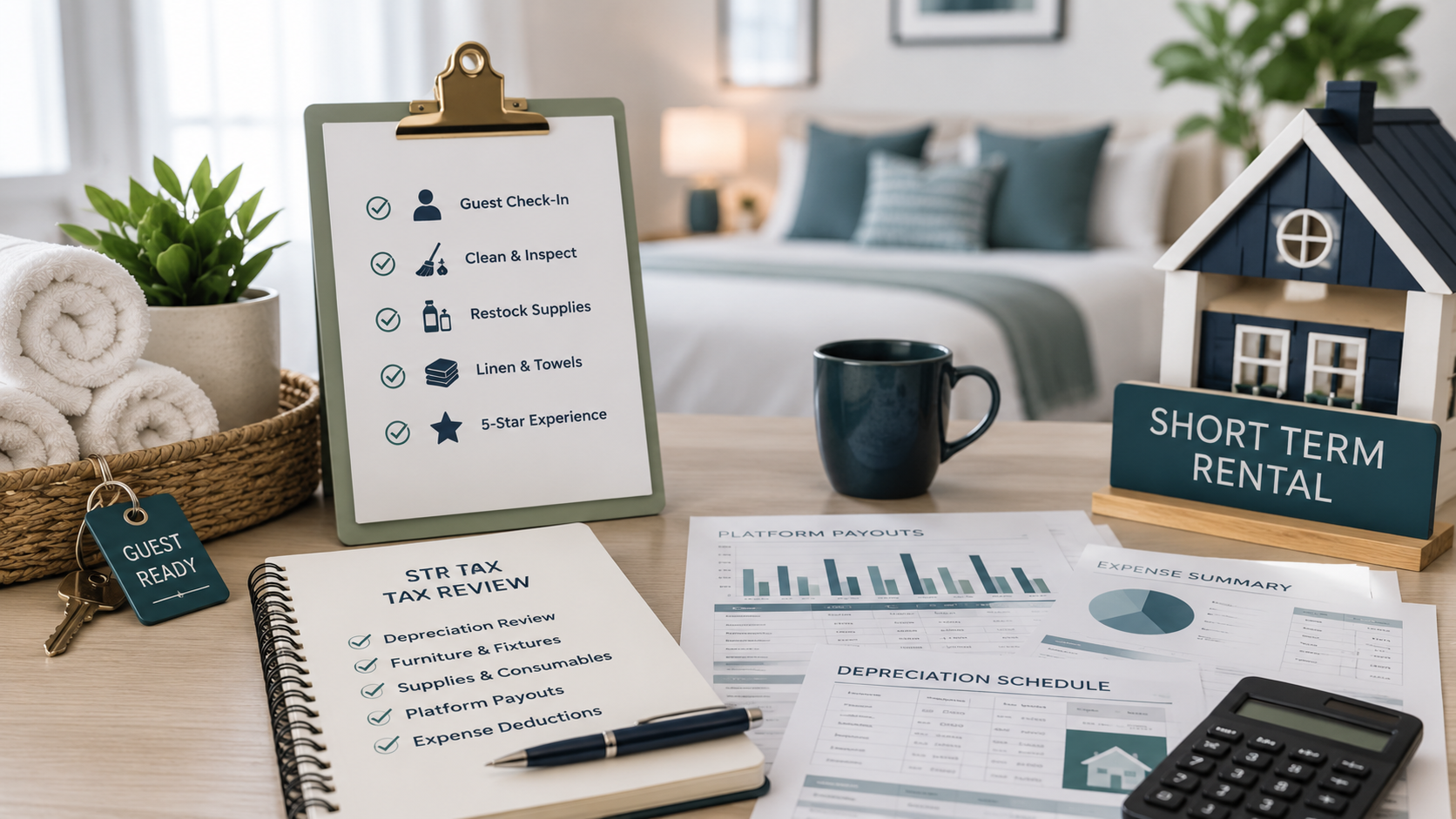
Before filing, Airbnb and short-term rental owners should review whether income was reconciled correctly, whether furniture and supplies were classified properly, and whether depreciation records match what was actually placed in service during the year.
Quick Summary
A short-term rental tax review helps organize the details that often get missed when owners rely only on bank deposits or platform summaries.
- Reconcile platform payouts to rental income
- Review 1099-K or platform tax forms
- Separate furniture, appliances, supplies, and repairs
- Check depreciation schedules for new assets
- Review cleaning, maintenance, and guest-related expenses
- Identify bookkeeping cleanup issues before filing
Why STR Tax Review Is Different
A short-term rental often operates more like a rental property and a hospitality activity at the same time. You may have guest stays, cleaning fees, platform fees, refunds, furniture purchases, supplies, local taxes, professional photos, repairs, and personal-use considerations.
That means your tax review should go beyond simply adding up deposits. The goal is to understand the full activity and organize the records in a way that supports accurate tax preparation.
Start With Platform Payouts and Rental Income
Platform payouts are one of the most common areas where short-term rental owners get confused. The amount deposited into your bank account may not equal gross rental income because platform fees, refunds, adjustments, cleaning fees, guest charges, or taxes may be handled before or after payout.
If you receive a Form 1099-K or annual platform summary, compare it to your bank deposits and booking reports. The tax return should be based on the correct income and expense records, not just a quick total from one report.
Review These Platform Payout Items Before Filing
Before tax preparation, gather your platform statements and review what each report includes. Different platforms may present information differently, so you need to know whether you are looking at gross revenue, net payout, fees, taxes, adjustments, or deposits.
Free Checklist: Review Your Rental Tax Records Before Filing
Short-term rental owners often have more moving pieces than traditional landlords. Use the free Rental Property Tax Savings Checklist to review income, expenses, depreciation, repairs, improvements, and records before tax preparation.
Furniture, Fixtures, and Guest-Ready Items
Short-term rental owners often buy furniture and guest-ready items that traditional landlords may not purchase as frequently. Beds, mattresses, sofas, dining sets, nightstands, curtains, lamps, televisions, kitchenware, linens, and décor may need careful review.
Some items may be supplies or operating expenses. Other items may be depreciable assets. Larger purchases, grouped furniture packages, appliances, and property upgrades should not automatically be coded to one generic supply category.
| Item Type | Examples | What to Review |
|---|---|---|
| Furniture | Beds, sofas, dining tables, dressers, outdoor seating | Cost, date placed in service, whether it should be tracked as an asset |
| Appliances | Refrigerator, washer, dryer, microwave, dishwasher | Whether the item is a repair, replacement, or separate depreciable asset |
| Supplies | Toiletries, paper goods, cleaning supplies, small guest amenities | Whether items are consumed in the rental activity and properly documented |
| Linens | Towels, sheets, pillows, blankets, mattress protectors | Whether the purchases are recurring supplies or longer-use items |
| Improvements | Flooring, remodels, built-ins, major upgrades | Whether the cost should be capitalized and depreciated instead of expensed |
Depreciation Review for Short-Term Rentals
Depreciation is one of the most important review areas for short-term rental owners. The building, improvements, appliances, furniture, and certain equipment may have different tax treatment depending on the facts.
A depreciation review may help identify missing assets, old improvements that were never added to the depreciation schedule, new furniture purchases, or property upgrades that were incorrectly coded as regular expenses.
Depreciation Items to Review
- Original building basis and land allocation
- Major improvements and renovation projects
- Furniture and appliances placed in service
- Outdoor furniture, equipment, and guest-use assets
- Prior-year depreciation schedules
- Assets removed, replaced, sold, or abandoned
- Potential cost segregation questions for larger properties or improvements
Supplies, Cleaning, and Guest Experience Expenses
Short-term rental owners often spend money on supplies that support guest stays. These may include paper goods, soap, shampoo, coffee, kitchen basics, cleaning supplies, laundry supplies, replacement towels, light bulbs, batteries, and other consumable items.
The key is to track the expenses clearly and separate routine supplies from larger items that may need different treatment. If everything is coded to “supplies,” your tax preparer may need more detail before filing.
Common STR Expense Categories
- Cleaning and turnover expenses
- Laundry and linen replacement
- Guest consumables and toiletries
- Small kitchen supplies
- Repair and maintenance items
- Utilities and internet
- Property management or co-hosting fees
- Professional photos and listing-related costs
Personal Use and Mixed-Use Issues
Short-term rental tax reporting can become more complex when the property is also used personally by the owner, family, or friends. Personal-use days, owner stays, discounted stays, blocked calendar days, and periods of repair or vacancy may need to be reviewed.
If the property is used both personally and as a rental, expenses may need allocation. The records should show rental days, personal days, days available for rent, and any unusual periods when the property was unavailable.
Need Help Reviewing Your Short-Term Rental Taxes?
Small Business Accounting Inc. provides remote tax and accounting services nationwide for Airbnb owners, short-term rental owners, landlords, real estate investors, commercial property owners, and property managers.
If your STR records include platform payouts, 1099-K reporting, furniture purchases, supplies, depreciation questions, or bookkeeping cleanup issues, a focused review may help you organize the return before filing.
Bookkeeping Cleanup Before STR Tax Preparation
If platform reports, bank deposits, cleaning expenses, owner transfers, supplies, and furniture purchases are not organized, bookkeeping cleanup may be needed before the return is prepared.
Cleanup may include reconciling bank accounts, separating each property, reviewing income reports, organizing expense categories, identifying repairs and improvements, and preparing a tax-ready package for filing.
For help organizing rental records, visit our Rental Property Bookkeeping Cleanup page.
When a Depreciation and Tax Savings Review May Help
A short-term rental tax review may lead to a broader depreciation and tax savings review when the property has major furniture purchases, remodels, appliance replacements, cost basis questions, prior-year depreciation issues, or potential cost segregation planning needs.
This review can help identify whether the depreciation schedule appears complete, whether assets may be missing, and whether larger projects should be reviewed before filing.
Learn more about our Real Estate Depreciation & Tax Savings Review service.
Cost Segregation Considerations for STR Owners
Some short-term rental owners with larger purchases, major improvements, or investor-focused properties may want to ask whether cost segregation planning is worth discussing. Cost segregation is not needed for every property, and the benefit depends on facts, income, property type, tax position, and future plans.
Small Business Accounting Inc. does not prepare engineering-based cost segregation studies in-house. When a formal cost segregation study is appropriate, the firm can help clients understand the tax impact, coordinate with a qualified third-party provider, and properly use the final report for tax planning and filing.
Learn more on our Cost Segregation Tax Planning page.
Related Short-Term Rental Tax Services
Depending on your records and filing needs, these related services may be helpful:
Frequently Asked Questions
Do short-term rental owners need a different tax review than long-term landlords?
Often, yes. Short-term rentals may involve platform payouts, cleaning fees, guest supplies, furniture, personal-use days, 1099-K reporting, and hospitality-style expenses that require more detailed review than a traditional long-term rental.
Should I report my bank deposits or my platform gross income?
Do not rely only on bank deposits without reviewing the platform reports. Deposits may be net of fees, refunds, taxes, or other adjustments. Your records should reconcile gross activity, fees, refunds, and deposits so the tax return is prepared correctly.
Are furniture and appliances deductible for an Airbnb?
Furniture and appliances may need to be reviewed as supplies, repairs, improvements, or depreciable assets depending on the item, cost, use, and facts. Larger purchases should not automatically be treated as ordinary supplies without review.
What records should I keep for short-term rental supplies?
Keep receipts, invoices, platform reports, cleaning invoices, supply purchases, utility bills, bank records, and notes showing the property connection. Good records make it easier to separate supplies from larger assets or improvements.
What if my 1099-K does not match my bank deposits?
This can happen because Form 1099-K and platform reports may show gross payments, while bank deposits may reflect fees, refunds, adjustments, or timing differences. The difference should be reconciled before filing.
When should I request STR tax services?
Consider requesting help if you have multiple platforms, 1099-K questions, missing depreciation, furniture purchases, mixed personal use, messy books, major improvements, or uncertainty about how to categorize expenses before filing.
Final Step: Review the STR Details Before Filing
Short-term rental taxes are easier to prepare when platform payouts, furniture purchases, supplies, cleaning costs, depreciation schedules, and personal-use records are organized before tax season.
Small Business Accounting Inc. can help short-term rental owners review their records, organize the tax details, and identify items worth discussing before filing.