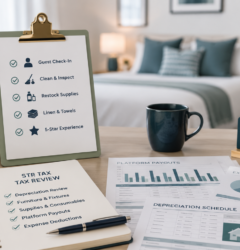
Cost Segregation for Rental Property Owners: When It May Be Worth a Closer Look
Cost segregation can be a powerful real estate tax planning strategy, but it is not automatically right for every rental property owner. Before paying for a formal study, landlords should understand what cost segregation does, when it may be useful, and how the tax impact fits into their bigger rental property plan.
If you own a rental home, short-term rental, Airbnb, apartment building, commercial rental property, or mixed-use property, you may have heard that cost segregation can help create larger depreciation deductions earlier in the ownership period. That can be true in the right situation, but the decision should be based on your property type, purchase price, improvements, tax position, holding period, passive loss limits, and documentation.
Cost segregation is not simply a tax software entry. It is a detailed review of a property’s components to determine whether certain assets may be classified separately from the building and depreciated over shorter recovery periods. For some owners, this can improve tax planning and cash flow timing. For others, the study cost, tax limitations, future sale plans, or lack of supporting records may make it less useful.
Quick Summary: What Cost Segregation Does
What Is Cost Segregation?
Cost segregation is a tax planning method used to identify and reclassify certain components of real estate for depreciation purposes. Instead of treating the entire building as one long-life asset, a qualified cost segregation study may separate specific components into shorter-life categories when the facts support that treatment.
For residential rental property, the building itself is generally depreciated over a long recovery period. Certain assets connected to the rental activity may have shorter recovery periods, depending on what they are, how they are used, and how they are classified. This is why a detailed review can matter.
For example, a rental property may include items such as appliances, furniture, certain flooring, exterior improvements, specialty electrical components, or site improvements. A proper study looks at the facts and determines whether any part of the property should be treated differently from the building structure.
When Cost Segregation May Be Worth a Closer Look
Cost segregation is usually most worth reviewing when the potential tax benefit is large enough to justify the study cost and the owner has a tax situation that can actually use the accelerated deductions. The decision is not only about the property. It is also about the owner’s broader tax picture.
Cost segregation may be worth reviewing when:
- You purchased or built a higher-value rental property.
- You completed major renovations, additions, or improvements.
- You own a furnished rental, Airbnb, or short-term rental with significant personal property.
- You own commercial rental property or mixed-use real estate.
- You have taxable rental income or other planning reasons to accelerate depreciation.
- You plan to hold the property long enough for the timing benefit to matter.
- You are trying to organize depreciation before rental tax preparation.
- You want to review whether bonus depreciation or shorter-life assets may apply to specific property components.
If you are unsure whether your rental property is a good candidate, a Real Estate Depreciation Tax Savings Review can help you evaluate the tax impact before deciding whether to order a formal study.
When Cost Segregation May Not Be the Best Fit
Cost segregation is not always the right move. Some landlords hear about accelerated depreciation and assume it always creates immediate tax savings. In reality, the benefit may be limited by passive activity rules, low taxable income, short holding period, planned sale, poor documentation, or the cost of the study.
It may not be worth pursuing when:
- The property has a low depreciable basis and limited separate assets.
- You are planning to sell the property soon and do not want to accelerate deductions before a sale without reviewing recapture impact.
- Your rental losses are already limited and the added depreciation may only increase suspended passive losses.
- You do not have purchase records, renovation records, invoices, or closing documents to support the analysis.
- The estimated tax benefit is too small compared with the cost of the study.
- You are looking for a guaranteed tax result instead of a fact-based planning review.
In these situations, it may still be useful to review your depreciation schedule and fixed asset records, but a full formal study may not be the first step.
Cost Segregation Readiness: What to Review First
Before ordering a formal cost segregation study, rental property owners should gather key documents and review whether the property has enough potential benefit to justify the next step.
| Review Area | Why It Matters | Helpful Records |
|---|---|---|
| Purchase Price and Basis | The starting basis affects how much depreciation may be available. | Closing statement, settlement statement, appraisal, purchase agreement. |
| Land vs Building Allocation | Land is not depreciable, so the building and land split should be reasonable and supported. | County assessment, appraisal, tax records, purchase documents. |
| Renovations and Improvements | Major improvements may need to be capitalized and depreciated separately. | Contractor invoices, receipts, project summaries, before-and-after records. |
| Furnishings and Appliances | Furnished rentals and short-term rentals may have separate assets that deserve review. | Furniture receipts, appliance invoices, setup costs, inventory list. |
| Current Depreciation Schedule | The existing tax return may already include assets that need to be corrected, reviewed, or reorganized. | Prior tax returns, Form 4562, Schedule E, fixed asset list. |
| Tax Impact | Accelerated depreciation is most useful when it produces a meaningful tax planning benefit. | Current-year income estimate, passive loss carryovers, tax projection. |
Why Airbnb and Short-Term Rental Owners Should Pay Attention
Short-term rental properties often include more separate assets than a traditional unfurnished long-term rental. Furniture, appliances, decor, equipment, outdoor items, and guest-use amenities can create more complexity in the depreciation schedule.
This does not mean every Airbnb needs a cost segregation study. However, it does mean that short-term rental owners should be more careful with asset tracking, placed-in-service dates, personal-use days, improvements, and recordkeeping. If the property was recently purchased, heavily furnished, renovated, or converted from personal use, a closer depreciation review may be helpful.
For help with income reporting, depreciation, and tax preparation for short-term rentals, visit our Airbnb & Short-Term Rental Tax Services page.
Why Bookkeeping Cleanup Matters Before Cost Segregation
A cost segregation decision is only as useful as the records behind it. If repair costs, improvements, furniture, appliances, loan costs, escrow items, and personal expenses are mixed together, it becomes harder to evaluate the property correctly.
Good rental bookkeeping helps separate deductible repairs from capital improvements, identify assets that may need to be depreciated, organize purchase and renovation records, and support the numbers used for tax planning. This is especially important for landlords with multiple properties, mixed-use properties, or rentals that changed use during the year.
If your records need cleanup before tax filing or depreciation review, our Rental Property Bookkeeping Cleanup service can help organize the records into a more tax-ready format.
Cost Segregation Is a Tax Timing Strategy
One of the most important things to understand is that cost segregation generally changes the timing of depreciation deductions. It may move more depreciation into earlier years, but it does not automatically mean permanent tax savings in every situation.
That timing can still be valuable. Earlier deductions may improve cash flow, reduce current taxable rental income, or support broader tax planning. However, the benefit should be reviewed together with passive activity limitations, at-risk rules, future sale plans, depreciation recapture, 1031 exchange planning, and the owner’s overall tax picture.
If you may sell or exchange the property in the near future, review the depreciation history before making a decision. For sale or exchange planning, you may also want to review our 1031 Exchange Tax Planning page.
Need Help Reviewing the Tax Impact First?
A formal cost segregation study may be useful, but it should start with a practical tax impact review. Small Business Accounting Inc. can help evaluate your depreciation schedule, rental records, and potential planning issues before you decide whether to move forward.
Request a Depreciation Tax Savings ReviewCost Segregation Readiness Checklist for Rental Owners
Use this checklist to decide whether your property may deserve a closer look:
- You purchased, built, or renovated a rental property in the last few years.
- Your property has a meaningful depreciable building basis.
- You have a furnished rental, Airbnb, or short-term rental with significant setup costs.
- You made major improvements, upgrades, additions, or remodels.
- Your tax return currently depreciates everything as one building asset.
- Your fixed asset schedule does not clearly list appliances, furnishings, improvements, or land improvements.
- You have taxable rental income or need a projection to understand whether accelerated depreciation would help.
- You have passive loss carryovers and want to understand whether additional depreciation would be usable now or later.
- You plan to hold the property long enough for the timing benefit to matter.
- You have enough records to support a deeper review.
How Small Business Accounting Inc. Can Help
Small Business Accounting Inc. helps rental property owners review depreciation, organize rental tax records, prepare rental property tax returns, and evaluate whether deeper cost segregation planning may be worth exploring.
We do not prepare engineering-based cost segregation studies in-house. Instead, when a formal study appears appropriate, we can help you understand the tax impact, coordinate with a qualified third-party provider, and use the final report properly in tax planning and filing.
Our real estate tax services are available remotely nationwide for landlords, Airbnb owners, short-term rental owners, real estate investors, commercial property owners, and property managers. Hawaii and Oahu clients may ask about local appointment availability when appropriate.
For broader support, visit our Real Estate Tax & Accounting hub. For annual filing support, visit our Rental Property Tax Preparation page. For cost segregation planning support, visit our Cost Segregation Tax Planning page.
Frequently Asked Questions About Cost Segregation for Rental Property Owners
Is cost segregation worth it for every rental property?
No. Cost segregation is most useful when the potential accelerated depreciation benefit is large enough to justify the study cost and the owner’s tax situation can benefit from the timing of the deductions.
Do I need a formal cost segregation study?
Not always. Some rental owners may only need a depreciation review or better fixed asset organization. A formal study is more likely to be considered when the property value, renovations, separate assets, and tax impact make the deeper analysis worthwhile.
Can Small Business Accounting Inc. prepare the cost segregation study?
No. Small Business Accounting Inc. does not prepare engineering-based cost segregation studies in-house. When appropriate, we can help clients understand the tax impact, coordinate with a qualified third-party provider, and use the final report for tax planning and filing.
Can cost segregation help Airbnb or short-term rental owners?
It may be worth reviewing for some Airbnb or short-term rental owners, especially if the property was recently purchased, furnished, renovated, or improved. However, the tax benefit depends on the facts, records, and owner’s tax position.
What records should I gather before reviewing cost segregation?
Gather the closing statement, purchase agreement, appraisal or assessment records, renovation invoices, furniture and appliance receipts, prior depreciation schedules, prior tax returns, and rental bookkeeping records.
Will cost segregation guarantee tax savings?
No. Cost segregation does not guarantee tax savings. It may accelerate depreciation in the right situation, but the actual result depends on the property, tax law, passive activity rules, income, holding period, and other facts.
Want to Know Whether Cost Segregation Is Worth a Closer Look?
Before paying for a formal study, request a depreciation tax savings review. We can help you review your rental property records, depreciation schedule, improvements, and tax planning opportunities so you can make a more informed decision.