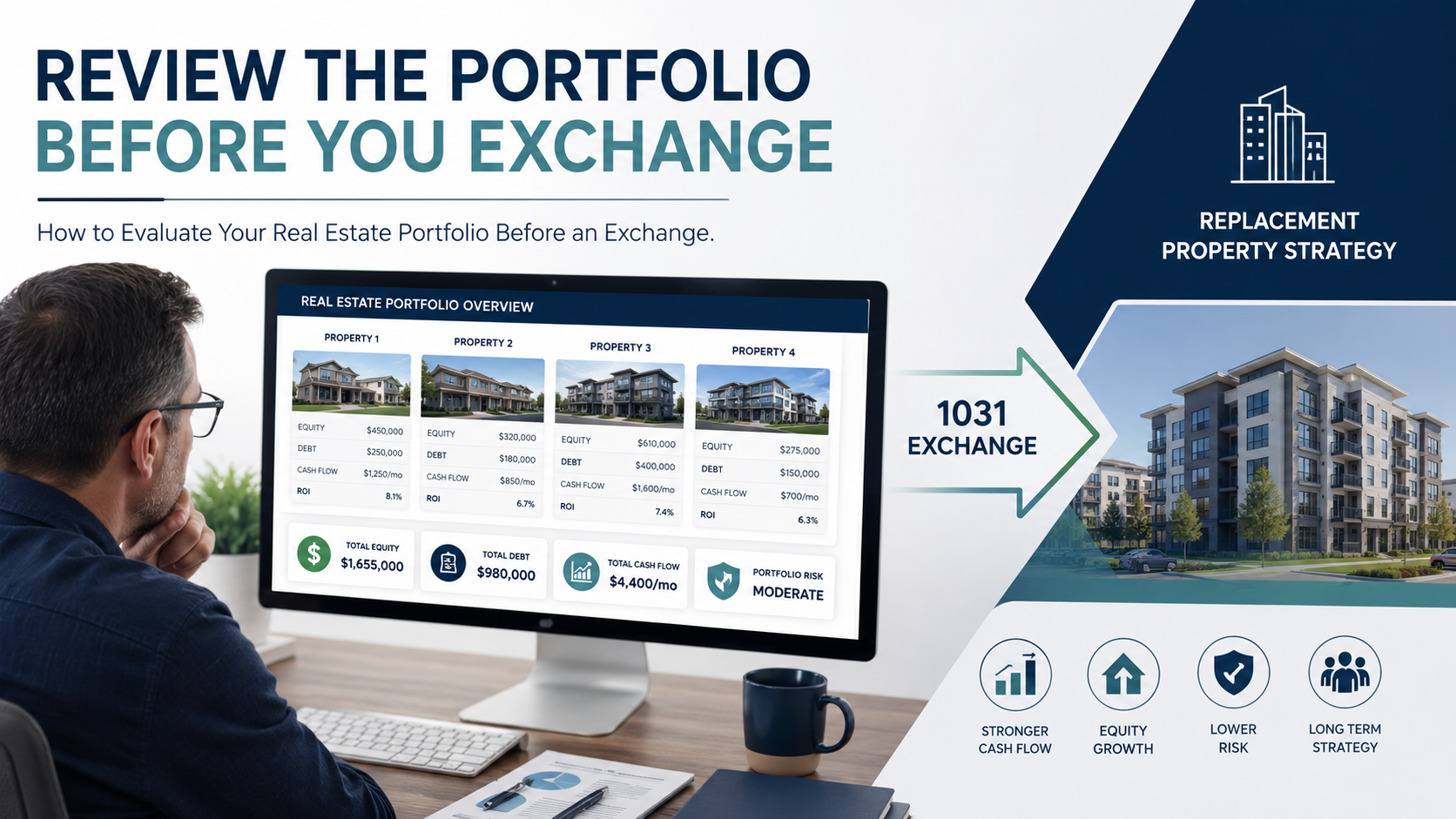
Before starting a 1031 exchange, do not look only at the property you are selling. Look at the entire real estate portfolio.
A 1031 exchange can preserve equity and keep capital invested, but the replacement property decision should be based on what the portfolio actually needs next.
Planning question: Is your current portfolio built for the next stage of your life, or only for the stage you were in when you bought the properties?
Why Portfolio Review Should Come Before Replacement Property Shopping
Many investors start a 1031 exchange by asking, “What can I buy that qualifies?” That is the wrong starting point.
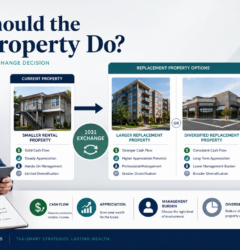
A better question is, “What problem should the next property solve?” The answer may be cash flow, appreciation, management burden, market concentration, debt risk, retirement income, or long-term family planning.
If you do not review the portfolio first, you may exchange into a property that satisfies the technical requirements but does not improve your financial life.
Review Each Property by Its Current Job
Every property in a portfolio should have a job. Some properties are growth assets. Some are income assets. Some are legacy assets. Some are simply old decisions that were never reviewed again.
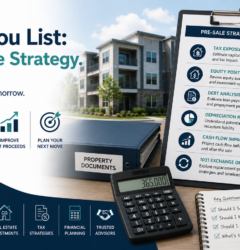
Before an exchange, list each property and ask:
- Is this property mainly for cash flow, appreciation, tax planning, or long-term family wealth?
- Does the property still fit that job?
- Is the property producing enough return for the equity tied up in it?
- How much time and stress does it require?
- Would the portfolio be stronger if this equity were redeployed?
Look at Concentration Risk
Sometimes the problem is not that a property is bad. The problem is that too much wealth depends on one property, one market, one tenant type, or one income strategy.
Concentration risk can show up when most of your equity is tied to one property, one city, one short-term rental market, one commercial tenant, or one local economy.
A 1031 exchange may be used to diversify, but diversification should not be automatic. It should support the investor’s goals and risk tolerance.
Review Cash Flow and Debt
Before deciding what to exchange into, review the current portfolio’s cash flow and debt structure.
- Which properties produce dependable net cash flow?
- Which properties look good on gross rent but weak after expenses?
- Which properties are most exposed to interest rate, refinance, or balloon-payment risk?
- How much reserve does each property need?
- Would the replacement property improve or weaken cash flow stability?
Important: A replacement property with higher gross rent is not automatically better. Debt service, reserves, repairs, vacancy, and management costs can change the real result.
Review Management Burden
Real estate investors often focus on numbers and ignore owner workload. That can be a major mistake, especially for landlords nearing retirement or already feeling burned out.
Before an exchange, consider whether the current portfolio requires too many decisions, too many repairs, too much tenant management, or too much local involvement.
If the goal is simplification, the replacement property should not recreate the same burden in a new form.
Define the Replacement Property Mission
After reviewing the portfolio, define what the next property needs to do.
The replacement property mission might be:
- Increase dependable cash flow.
- Improve long-term appreciation potential.
- Reduce management burden.
- Diversify into another market or property type.
- Consolidate multiple small rentals into one stronger asset.
- Support retirement income.
- Prepare the portfolio for future heirs.
Once the mission is clear, replacement property shopping becomes more strategic.
Want the Full 1031 Strategy Framework?
The AssetWise Institute course walks through portfolio review, sell/refinance/exchange decisions, replacement property strategy, execution risk, tax coordination, retirement planning, and legacy considerations.
View the 1031 Exchange Strategy CourseUse Tools to Organize the Review
A portfolio review can be easier when the investor uses worksheets or calculators to compare equity, debt, cash flow, concentration risk, replacement property fit, and advisor questions.
Looking for 1031 planning templates and workbooks?
Final Takeaway
A 1031 exchange should not be driven only by the property being sold. It should be driven by the portfolio you want next.
Before selling, review equity, cash flow, debt, concentration risk, management burden, replacement property goals, and long-term planning needs.
Important Educational Disclaimer
This article is for general educational purposes only and does not provide tax, legal, financial, investment, lending, real estate, or qualified intermediary advice. 1031 exchange rules are complex and time-sensitive. Before selling, refinancing, exchanging, identifying replacement property, changing ownership structure, or making any tax or investment decision, consult your own CPA, tax advisor, attorney, qualified intermediary, lender, financial advisor, and real estate professionals.
Official references: IRS Like-Kind Exchanges Real Estate Tax Tips and IRS Instructions for Form 8824.