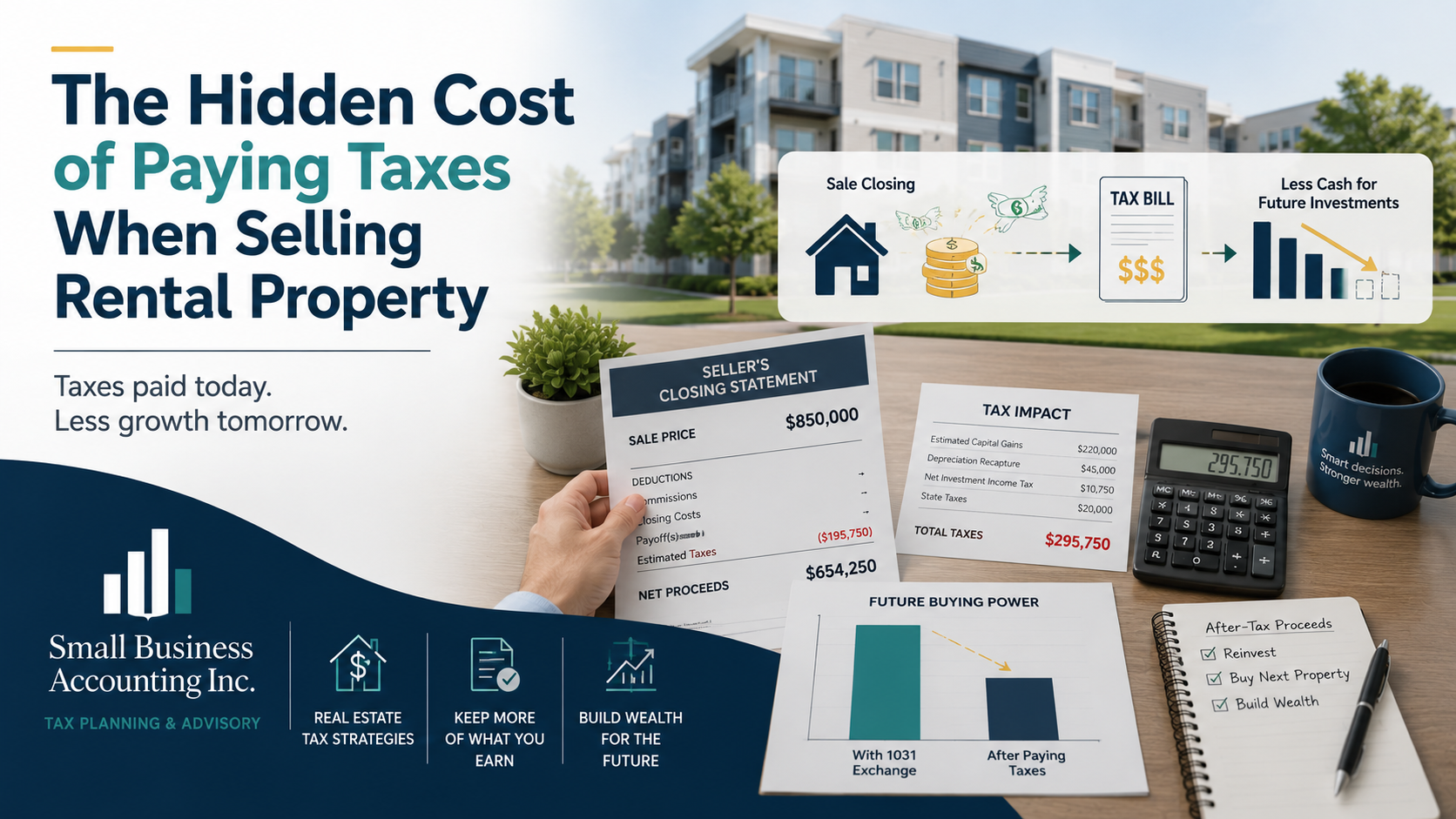
When a landlord sells an appreciated rental property, the cost is not always limited to the tax bill shown on the closing or tax projection.
The bigger cost may be what happens after the sale: less capital available for the next investment, lower buying power, smaller future cash flow, and fewer options.
Planning question: If you sell and pay taxes today, how much future investment power are you giving up?
The Tax Bill Is Only the First Layer
Many investors focus on one number: “How much tax will I owe if I sell?” That number matters, but it is only part of the decision.
When selling rental property, investors may need to consider several layers of tax exposure, including capital gains tax, depreciation recapture, state tax, and possibly other tax effects depending on the investor’s facts.
After taxes and closing costs, the investor may have much less equity available than expected.
Depreciation Recapture Can Surprise Landlords
Depreciation can help during ownership because it may reduce taxable rental income. But when the property is sold, prior depreciation can create depreciation recapture issues.
This is one reason a property that looks profitable on paper may create a larger tax result than the owner expected.
Important: Do not estimate your sale result based only on the difference between purchase price and sale price. Your adjusted basis, depreciation history, improvements, selling costs, and state tax rules can all matter.
The Hidden Cost: Lost Reinvestment Capital
The tax paid today may also reduce every future dollar that capital could have helped produce.
For example, if taxes reduce the amount available for the next investment, the investor may have less down payment, less borrowing power, and fewer replacement property options.
That can affect:
- The size of the next property.
- The quality of the next asset.
- The amount of future rental income.
- The ability to diversify into multiple properties.
- The investor’s long-term wealth-building path.
When Paying the Tax May Still Be Reasonable
This does not mean every investor should complete a 1031 exchange. Sometimes selling and paying the tax is reasonable.
Selling may make sense when the investor needs liquidity, wants to exit real estate, has weak replacement options, or wants to reduce risk and management burden.
The key is to make a conscious after-tax decision instead of assuming the sale proceeds will be larger than they really are.
Questions to Review Before Selling
- What is your estimated adjusted basis?
- How much depreciation has been taken?
- What federal and state tax exposure may apply?
- How much cash will remain after taxes, debt payoff, and closing costs?
- What would that remaining cash be used for?
- Would a refinance or 1031 exchange create a better long-term outcome?
- Do you want liquidity, growth, retirement income, simplification, or exit?
Want to Learn the Full 1031 Decision Framework?
The AssetWise Institute course walks through how investors can compare selling, refinancing, and a 1031 exchange before making a major rental property decision.
View the 1031 Exchange Strategy CourseTools Can Help You Model the Decision
A written explanation is useful, but many investors also need spreadsheets and planning tools to compare sale proceeds, estimated taxes, refinance options, and exchange buying power.
Looking for 1031 calculators and planning templates?
Final Takeaway
The hidden cost of selling rental property is not just the tax bill. It is also the future buying power and investment flexibility that may be lost when less capital remains available.
Before selling, compare the after-tax result against your long-term goals, replacement options, cash needs, debt, and risk tolerance.
Important Educational Disclaimer
This article is for general educational purposes only and does not provide tax, legal, financial, investment, lending, real estate, or qualified intermediary advice. 1031 exchange rules are complex and time-sensitive. Before selling, refinancing, exchanging, identifying replacement property, changing ownership structure, or making any tax or investment decision, consult your own CPA, tax advisor, attorney, qualified intermediary, lender, financial advisor, and real estate professionals.
Official references: IRS Like-Kind Exchanges Real Estate Tax Tips and IRS Instructions for Form 8824.