Rental Repairs vs Capital Improvements: Common Examples Landlords Should Review
Rental property owners often ask whether a cost should be deducted as a repair or capitalized as an improvement. The answer can affect current deductions, depreciation, bookkeeping, and the records needed for tax preparation.
Repairs and improvements are one of the most common areas where rental property owners need clarification before tax filing. A plumbing service call, appliance replacement, roof work, flooring project, painting job, or renovation invoice may look simple at first, but the tax treatment can depend on the facts.
In general, a repair keeps the rental property in ordinary operating condition. A capital improvement usually makes the property better, restores it, or adapts it to a new or different use. When a cost is treated as an improvement, it is typically added to basis and recovered through depreciation instead of being deducted immediately.
This article walks through common examples landlords should review, what records to keep, and when it may be helpful to request a Real Estate Depreciation Tax Savings Review.
Quick Guide
Why Repairs vs Improvements Matter for Rental Property Owners
The repair versus improvement decision can affect when a rental property owner receives a tax benefit. A repair may be deductible as a current rental expense if it is ordinary and necessary for the rental activity. A capital improvement is generally recovered over time through depreciation.
That timing difference matters because rental owners often pay for many property-related costs in the same year: small repairs, ongoing maintenance, major replacements, renovations, appliances, flooring, painting, landscaping, and systems work. If everything is placed into one broad “repairs” category, the tax preparer may need to slow down and ask for more detail.
Clean classification can also affect depreciation schedules, future sale planning, and property basis records. If a project should be capitalized, it may need to be added to your depreciation records. If a cost was truly a repair, it may need to be tracked separately from improvements.
A Simple Way to Think About Repairs vs Improvements
A repair generally keeps the property in ordinary operating condition. It helps maintain the rental property, fix wear and tear, or restore a small part of the property without materially improving the property as a whole.
A capital improvement generally does more than maintain the property. It may make the property better, restore a major component, extend useful life, increase value, or adapt the property to a new or different use.
Often Reviewed as Repairs
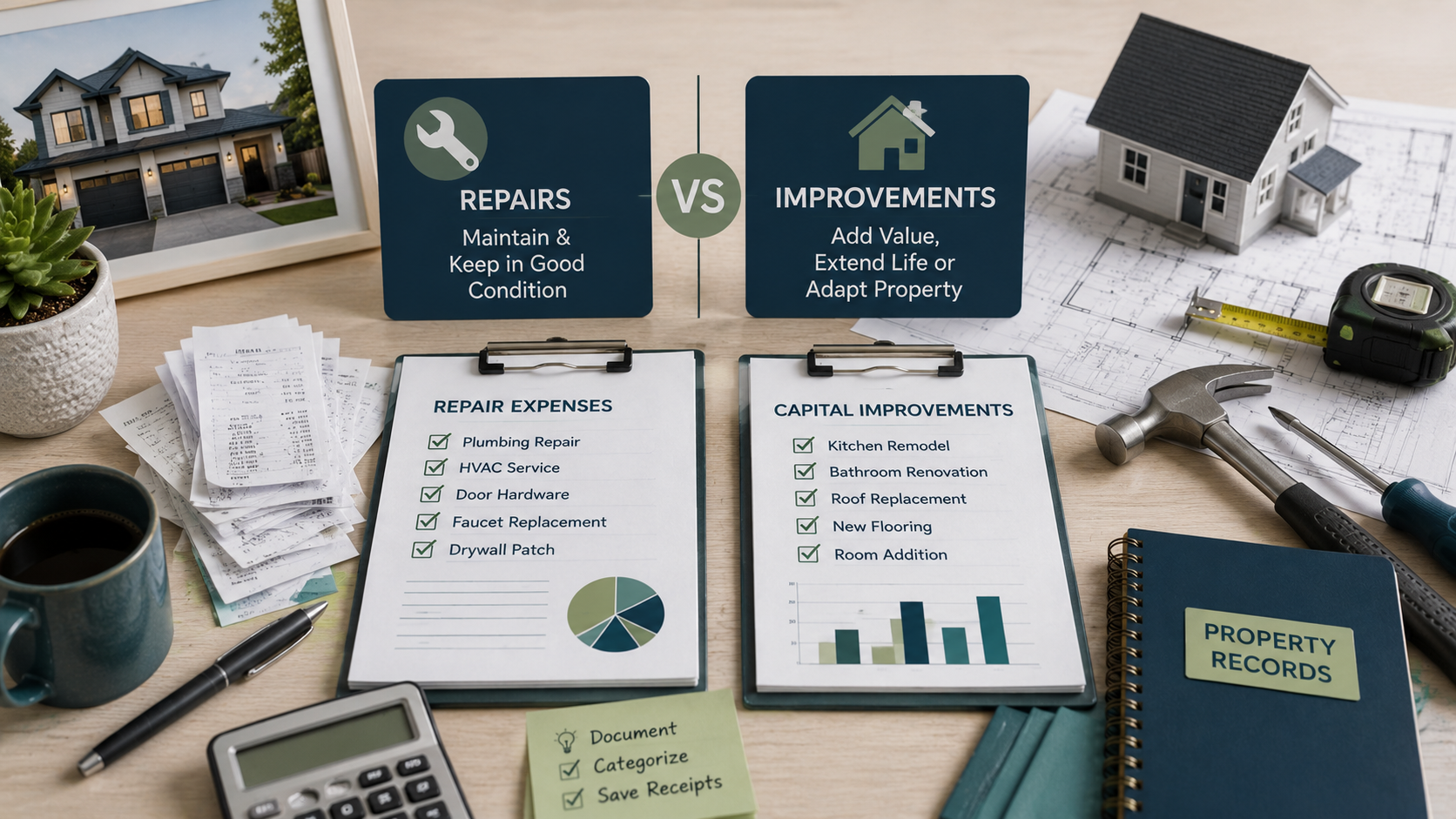
Examples may include fixing a leaking pipe, repairing a broken window, patching a small area of drywall, replacing a few damaged tiles, servicing an air conditioner, or repainting after ordinary tenant wear.
Often Reviewed as Improvements
Examples may include replacing an entire roof, installing a new HVAC system, completing a major remodel, adding a new room, replacing all flooring, or upgrading a kitchen or bathroom.
These examples are not automatic answers. The facts matter. The same type of work may be treated differently depending on the scope, condition of the property, timing, and whether the project improved, restored, or adapted the property.
Common Examples Landlords Should Review
The table below gives practical examples that often come up during rental tax preparation. Use it as a starting point for organizing records, not as a final tax conclusion for every situation.
| Expense Area | Often Looks More Like a Repair | Often Needs Improvement Review |
|---|---|---|
| Plumbing | Fixing a leak, replacing a small part, clearing a clog, or repairing a faucet. | Replacing major plumbing lines, adding new plumbing, or upgrading a system as part of a renovation. |
| Roof | Patching a small leak or replacing a limited number of damaged shingles. | Replacing the entire roof or a major portion of the roofing system. |
| Flooring | Replacing a small damaged section of flooring or repairing tenant damage. | Replacing flooring throughout the unit or upgrading flooring as part of a larger remodel. |
| Appliances | Repairing a refrigerator, replacing a part, or servicing an appliance. | Buying a new appliance that needs to be added to the depreciation records. |
| Painting | Routine repainting between tenants or touch-up painting after ordinary wear. | Painting that is part of a major renovation, restoration, or property upgrade project. |
| Kitchen or Bathroom | Fixing a broken cabinet hinge, repairing a toilet, or replacing a small fixture. | Full remodel, new cabinets, new counters, new layout, upgraded plumbing, or major modernization. |
| HVAC | Routine maintenance, servicing, small parts, or repairs to keep the system working. | Replacing the entire HVAC system or installing a new system that improves the property. |
Need a Cleaner Starting Point Before Tax Prep?
Download the free Rental Property Tax Savings Checklist to help organize repairs, improvements, depreciation records, rental income, and tax preparation documents before filing.
Records to Keep for Repairs and Improvements
Good documentation helps your tax preparer understand what happened. Instead of providing only a bank transaction or credit card charge, try to keep records that explain the work, the property, and the reason for the expense.
- Contractor invoices with a clear description of the work performed.
- Receipts for materials, parts, appliances, fixtures, and supplies.
- Before-and-after photos for larger projects.
- Notes explaining whether the work was due to damage, wear and tear, tenant turnover, renovation, or upgrade.
- Property address or unit number connected to each expense.
- Payment records showing the date, amount, and vendor.
- Separate records for major appliances, flooring, roofs, HVAC systems, remodels, and additions.
- Prior-year depreciation schedules if an item may need to be added to fixed assets.
If you use bookkeeping software, avoid putting all property work into one broad category. Consider separating routine repairs, maintenance, supplies, appliances, capital improvements, and property-specific projects so your records are easier to review.
If your books need cleanup before the return can be prepared, our Rental Property Bookkeeping Cleanup service can help organize transactions and records into a more tax-ready format.
Red Flags That Repairs and Improvements Need a Deeper Review
Some rental property expenses are simple. Others need a closer look before they are deducted or capitalized. The following red flags may indicate that a deeper tax review is needed.
- A large expense is posted entirely to repairs with no invoice or description.
- A renovation project is split across many small receipts with no project summary.
- New appliances, flooring, HVAC, roof work, or remodel costs are mixed with routine maintenance.
- Repairs were made immediately after purchasing the property or before placing it in service as a rental.
- A contractor invoice uses vague wording such as “labor,” “property work,” “project,” or “materials.”
- The same project includes both repair work and upgrade work.
- Multiple properties are combined into one expense account without property-level detail.
- Prior-year depreciation schedules do not show major improvements that were completed in earlier years.
What About Safe Harbors and Small-Dollar Items?
Some rental property owners may have heard of safe harbor rules for tangible property, such as de minimis safe harbor or routine maintenance safe harbor. These rules can be helpful in the right situation, but they should be applied carefully and documented properly.
The key point is that safe harbors are not a substitute for good records. You still need invoices, payment records, descriptions, and a clear understanding of what was purchased or repaired. Depending on the facts, the tax return may also need proper elections or statements.
If you are unsure whether a project should be deducted, capitalized, depreciated, or reviewed under a safe harbor rule, it may be worth requesting a tax savings review before filing.
How Small Business Accounting Inc. Can Help
Small Business Accounting Inc. helps landlords, rental property owners, short-term rental owners, and real estate investors review rental property records before tax preparation. We help organize the facts so repairs, improvements, depreciation, and property basis questions can be handled more clearly.
Repairs vs Improvements Review
We help review invoices, project descriptions, and bookkeeping categories to identify items that may need repair, improvement, depreciation, or basis review.
Depreciation Tax Savings Review
We review depreciation schedules, fixed assets, improvements, and possible tax planning questions related to rental property records.
Rental Tax Preparation
We help prepare rental tax returns using organized income, expense, depreciation, and property-level documentation.
Real Estate Tax Planning
We help real estate investors think through tax records, depreciation, improvements, bookkeeping cleanup, and planning opportunities.
For broad real estate tax support, visit our Real Estate Tax & Accounting hub page. If your main concern is whether prior depreciation or improvements were handled correctly, start with the Real Estate Depreciation Tax Savings Review.
Special Note for Cost Segregation and Larger Projects
If you completed major renovations, purchased a higher-value rental property, own commercial property, or have significant building components that may need deeper analysis, cost segregation may come up as part of the conversation.
Small Business Accounting Inc. does not prepare engineering-based cost segregation studies in-house. When a formal cost segregation study is appropriate, we can help clients understand the tax impact, coordinate with a qualified third-party provider, and properly use the final report for tax planning and filing.
Learn more about our related support here: Cost Segregation Tax Planning.
Not Sure Whether a Rental Expense Was a Repair or Improvement?
If your rental property records include repairs, renovations, appliance purchases, flooring, roof work, HVAC, or major projects, a review can help organize the tax questions before filing.
Frequently Asked Questions
What is the difference between a rental repair and a capital improvement?
A repair generally keeps the rental property in ordinary operating condition. A capital improvement usually improves, restores, or adapts the property and may need to be capitalized and depreciated over time.
Can landlords deduct repairs in the year paid?
Many ordinary and necessary repair costs may be deductible as current rental expenses, but the treatment depends on the facts. Large projects, replacements, restorations, and upgrades may need improvement review before being deducted.
Is replacing an appliance a repair or improvement?
Repairing an appliance may be treated differently from buying a new appliance. A new appliance may need to be capitalized and depreciated, depending on the facts and the applicable tax rules.
Is painting a rental property a repair or improvement?
Routine painting between tenants may often look more like maintenance, while painting that is part of a larger renovation, restoration, or upgrade project may need closer review. The surrounding facts matter.
What records should landlords keep for repairs and improvements?
Keep invoices, receipts, payment records, before-and-after photos, project notes, property addresses, unit numbers, and any documents that explain what work was performed and why.
Can Small Business Accounting Inc. help review rental repairs and improvements?
Yes. Small Business Accounting Inc. provides remote tax and accounting support nationwide for landlords, rental property owners, short-term rental owners, and real estate investors who need help reviewing repairs, improvements, depreciation, and tax preparation records.