Did You Overpay Taxes on Your Rental Property? 7 Red Flags to Review
Rental property tax savings are often missed in quiet places: depreciation schedules, closing costs, repairs versus improvements, bookkeeping cleanup, and short-term rental income reporting. This guide walks through seven practical red flags that landlords, Airbnb owners, and real estate investors should review before assuming their rental return was handled correctly.
Quick Summary
If you own a rental property, your tax return may deserve a second look when depreciation is unclear, major repairs were entered without review, Airbnb income does not reconcile to platform reports, or your bookkeeping has large uncategorized balances. These issues do not always mean your return is wrong, but they are signs that a rental tax review may be helpful.
Why Rental Property Tax Returns Deserve a Careful Review
Rental real estate is not always complicated because of one big tax rule. It is often complicated because several small details have to work together. The income has to match. The expenses need to be categorized correctly. The land and building values need to be separated. Improvements, appliances, furniture, and major renovations may need to be handled differently than ordinary repairs.
For a long-term rental, the review may focus on Schedule E, depreciation, mortgage interest, repairs, property taxes, insurance, and passive loss limitations. For an Airbnb or short-term rental, the review may also include platform payouts, 1099-K reporting, cleaning fees, local taxes, personal use days, average guest stay, and whether the activity belongs on Schedule E or Schedule C.
Small Business Accounting Inc. helps rental property owners, Airbnb owners, landlords, and real estate investors review these issues through real estate tax planning, rental tax preparation, bookkeeping cleanup, depreciation review, and tax savings review services.
Want to Check Your Own Rental Property First?
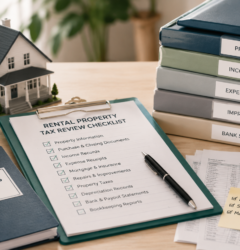
Download the free Rental Property Tax Savings Checklist to review depreciation, repairs, cost segregation readiness, bookkeeping red flags, and missing documents before requesting professional help.
7 Rental Property Tax Red Flags to Review
Red Flag 1: You Do Not Have a Depreciation Schedule for Each Rental Property
A depreciation schedule is one of the most important records for a rental property owner. It shows the assets being depreciated, the placed-in-service dates, cost basis, recovery periods, prior depreciation, and current-year depreciation.
If you do not have a depreciation schedule, it can be hard to know whether depreciation was missed, calculated incorrectly, or assigned to the wrong asset. It can also make future tax planning more difficult when you sell the property, replace assets, convert use, or review prior-year returns.
Red Flag 2: Land and Building Value Were Not Clearly Separated
Land is generally not depreciated, while the building and certain qualifying assets may be depreciated over time. If the entire purchase price was treated as one number without a reasonable land and building allocation, your depreciation may need to be reviewed.
A proper review may look at the closing statement, property tax assessment, appraisal, purchase contract, and other available information to determine whether the tax return used a reasonable basis allocation.
Red Flag 3: Repairs and Improvements Were All Treated the Same
Repairs and maintenance are not always treated the same as improvements. A minor repair may be currently deductible, while a major improvement may need to be capitalized and depreciated. Common examples that deserve review include flooring, roof work, kitchen remodels, bathroom remodels, HVAC replacements, plumbing work, and electrical upgrades.
The issue is not just the dollar amount. The facts matter. Did the work improve the property, restore it, adapt it to a new use, or form part of a larger renovation? Those details can change the tax treatment.
Red Flag 4: Furniture, Appliances, or Renovation Assets Were Lumped Into the Building
Rental owners often buy appliances, furniture, equipment, smart locks, security systems, hot tubs, and other items for a rental property. For Airbnb and furnished rental properties, these purchases can be significant.
When everything is lumped into the building, the tax return may not reflect the correct asset detail. In some cases, a property may also deserve a cost segregation readiness review, especially when there was a major purchase, renovation, remodel, or furnished short-term rental setup.
Small Business Accounting Inc. does not prepare engineering-based cost segregation studies in-house. When appropriate, the firm can help you understand whether a formal study may be worth exploring, coordinate with a qualified third-party provider, and properly use the final report for tax planning and filing.
Red Flag 5: Rental Income Does Not Reconcile to 1099-K, Airbnb, VRBO, Bank, or Property Manager Records
Rental income should be reviewed against the records that support it. For long-term rentals, that may include leases, rent rolls, bank deposits, and property manager statements. For Airbnb and short-term rentals, that may include platform reports, 1099-K forms, gross booking reports, cleaning fees, guest refunds, cancellations, and payout deposits.
One common issue is double-counting platform payouts. Another is reporting only the net deposit without reviewing platform fees, refunds, and taxes. A third issue is missing income that was deposited into a different account.
Red Flag 6: Mortgage Payments Were Deducted Without Splitting Principal, Interest, Taxes, and Insurance
A full mortgage payment is not usually one tax deduction. Part of the payment may be interest, part may reduce the loan principal, and part may go to escrow for property taxes or insurance. If the full payment was entered as mortgage interest or repairs, the books and tax return may need cleanup.
This is especially common when rental bookkeeping is done from bank feeds only and the mortgage payment is categorized quickly without reviewing the lender statement or Form 1098.
Red Flag 7: Airbnb, Personal Use, Passive Loss, or Bookkeeping Issues Were Not Reviewed
Short-term rentals can create additional tax questions. Personal use days, rental days, average guest stay, material participation, local tax obligations, cleaning and co-host payments, platform fees, supplies, and furniture tracking may all affect the final reporting position.
Bookkeeping can also create problems when owner transfers are recorded as income, owner draws are recorded as expenses, security deposits are treated incorrectly, or expenses are not separated by property.
If your rental books have large uncategorized expenses, negative loan balances, unclear transfers, duplicate income, or missing property-level tracking, it may be better to clean up the books before tax preparation rather than trying to fix everything during filing.
What to Review Before Assuming You Overpaid Taxes
A red flag does not automatically mean your tax return is wrong. It means there may be enough uncertainty to justify a closer review. Before deciding whether to amend a return, change depreciation, or pursue cost segregation planning, gather the records that support the facts.
Documents to Gather
- Prior-year tax returns and depreciation schedules
- Closing statement and purchase records
- Property tax assessment or appraisal if available
- Form 1098 mortgage interest statement
- Airbnb, VRBO, or platform income reports
- Repair, renovation, appliance, and furniture receipts
- Property manager statements and bank records
Questions to Ask
- Was depreciation claimed for each rental property?
- Was land separated from the building?
- Were major projects reviewed as repairs or improvements?
- Were short-term rental platform reports reconciled?
- Were mortgage payments split correctly?
- Were passive loss and personal use issues reviewed?
- Are the books clean enough for tax preparation?
Need a Rental Property Depreciation or Tax Savings Review?
If several red flags apply to your rental property, you may benefit from a structured review of your depreciation, repairs versus improvements, cost segregation readiness, bookkeeping, and prior-year tax reporting.
Small Business Accounting Inc. offers a dedicated Real Estate Depreciation Tax Savings Review for rental property owners, Airbnb owners, landlords, and real estate investors who want a clearer picture of potential tax issues before filing, amending, or planning ahead.
Helpful Service Pages for Rental Property Owners
Depending on what you find during your review, one of these service areas may be a better next step:
Real Estate Tax & Accounting
For broad rental property tax planning, accounting support, and real estate investor tax questions.
Rental Bookkeeping Cleanup
For messy books, uncategorized transactions, duplicate income, transfer issues, and property-level tracking problems.
Airbnb & STR Tax Services
For Airbnb, VRBO, short-term rental income, 1099-K reporting, platform fees, personal use days, and STR tax questions.
Rental Property Tax Preparation
For rental owners who need tax preparation support for Schedule E, depreciation, rental expenses, and prior-year carryovers.
Cost Segregation Tax Planning
For property owners who want to understand whether a cost segregation study may be worth exploring before paying for one.
Contact Small Business Accounting Inc.
For rental tax review, bookkeeping cleanup, tax planning, or questions about which service fits your situation.
Download the Free Rental Property Tax Savings Checklist
The checklist helps rental property owners review depreciation, repairs, improvements, cost segregation readiness, Airbnb and short-term rental issues, bookkeeping red flags, and missing documents.
Use it before tax preparation, before requesting a professional review, or before deciding whether your prior-year rental return may need a closer look.
Frequently Asked Questions
How do I know if I overpaid taxes on my rental property?
You may not know without reviewing the details. Common signs include missing depreciation, no depreciation schedule, land and building not separated, major improvements entered as repairs, rental income that does not reconcile, or messy bookkeeping. A review helps identify whether there may be issues worth correcting or planning around.
Does a missing depreciation schedule mean my tax return is wrong?
Not automatically. However, without a depreciation schedule, it is harder to verify whether depreciation was calculated correctly, whether assets were properly separated, and whether prior depreciation was tracked. It is a strong reason to gather your records and review the return.
Should every rental owner get a cost segregation study?
No. A formal cost segregation study is not right for every property. The benefit depends on the property type, purchase price, improvement costs, income level, passive loss rules, available records, and tax filing position. Small Business Accounting Inc. can help you evaluate whether a study may be worth exploring, but the engineering-based study itself should be prepared by a qualified third-party provider when appropriate.
What is the difference between repairs and improvements?
In general, repairs may maintain the property, while improvements may better, restore, or adapt the property. The facts matter. A small plumbing repair may be different from a full bathroom remodel. A patch may be different from a full roof replacement. This is why receipts, descriptions, dates, and project details are important.
Are Airbnb and short-term rental taxes different from long-term rental taxes?
They can be. Airbnb and short-term rental owners may need to review platform reports, 1099-K forms, cleaning fees, refunds, local taxes, personal use days, average guest stay, material participation, and whether the activity belongs on Schedule E or Schedule C. The correct answer depends on the facts.
Can Small Business Accounting Inc. help if my rental books are messy?
Yes. The firm provides rental property bookkeeping cleanup support, including reviewing income, expenses, mortgage splits, owner transfers, property-level tracking, platform payouts, and tax-ready records. Clean books can make rental tax preparation and planning much easier.
Ready to Review Your Rental Property Tax Position?
If this article helped you spot missing documents, unclear depreciation, major improvements, Airbnb tax questions, or bookkeeping cleanup issues, consider requesting a professional review.
Start with the free checklist, or contact Small Business Accounting Inc. to ask about rental property tax preparation, depreciation review, bookkeeping cleanup, cost segregation tax planning support, or a real estate tax savings review.
Disclaimer: This article is for general educational purposes only and does not provide legal, tax, accounting, investment, or engineering advice. Reading this article or contacting the firm does not create a client relationship. Tax results depend on each client’s facts and circumstances.