Rental Property Depreciation Mistakes That Can Cost Landlords Money
Depreciation is one of the most valuable tax tools available to rental property owners, but it is also one of the easiest areas to get wrong. A missed asset, incorrect land allocation, poor bookkeeping, or wrong treatment of improvements can quietly affect your deductions now and create problems later when you sell.
If you own a rental house, duplex, condo, Airbnb, short-term rental, or commercial property, depreciation may help you recover part of the cost of your property over time. The challenge is that depreciation is not just one number. It depends on your purchase price, land allocation, building basis, improvements, placed-in-service dates, personal-use periods, furnishings, appliances, and whether certain assets should be separated from the building.
For many landlords, depreciation mistakes do not show up immediately. They may sit inside a tax return for years until the property is refinanced, sold, exchanged, inherited, converted, or reviewed during tax preparation. That is why a periodic depreciation review can be valuable, especially if you have owned the property for several years, made major improvements, changed tax preparers, or purchased a property with mixed-use or short-term rental activity.
Quick Summary: Why Depreciation Mistakes Matter
Mistake 1: Depreciating the Entire Purchase Price
One of the most common rental property depreciation mistakes is depreciating the entire purchase price instead of separating the building from the land. Land is not depreciable. The building, certain improvements, appliances, furniture, and other qualifying assets may be depreciable, but the land portion must be removed from the depreciable basis.
For example, if you purchased a rental property for $600,000, that does not automatically mean you depreciate $600,000. Part of the purchase price may belong to land. Depending on the facts, you may need to review the closing statement, county assessment, appraisal, allocation records, or other reasonable support for how much of the purchase price relates to land versus building.
Why this matters
If too much basis is assigned to the building, depreciation may be overstated. If too much basis is assigned to land, depreciation may be understated. Either way, your tax records may not reflect the property correctly.
Mistake 2: Forgetting to Start Depreciation When the Property Is Placed in Service
Rental depreciation usually begins when the property is placed in service, not necessarily when you bought it. A property is generally placed in service when it is ready and available for rent. This can be different from the closing date, the renovation start date, or the date the first tenant moves in.
This issue comes up often when landlords buy a property, spend months repairing or furnishing it, and then list it for rent later. If the placed-in-service date is wrong, the first-year depreciation may also be wrong.
Common examples
- A long-term rental purchased in March but not ready for tenants until June.
- An Airbnb furnished in April but not listed for guests until May.
- A property converted from personal use to rental use partway through the year.
- A unit that sits vacant while being prepared for rental use.
If your property has Airbnb or short-term rental activity, review the placed-in-service date carefully. You may also want to visit our Airbnb & Short-Term Rental Tax Services page for help with rental classification, income reporting, and record organization.
Mistake 3: Treating Improvements as Repairs
Another major depreciation mistake is deducting a capital improvement as if it were a current repair. Repairs and maintenance may often be deducted currently if they keep the property in ordinary operating condition. Improvements, however, may need to be capitalized and depreciated over time.
A simple repair might include fixing a broken part, patching a small leak, or replacing a minor component. An improvement may include a new roof, major remodel, room addition, significant restoration, or work that materially increases the value, use, or life of the property.
If your rental books are messy or repairs and improvements are mixed together, our Rental Property Bookkeeping Cleanup service can help organize the records before tax preparation or a depreciation review.
Mistake 4: Missing Appliances, Furniture, Carpets, and Other Separate Assets
Many landlords think depreciation only applies to the building. In reality, rental properties often include other depreciable assets, such as appliances, furniture, carpets, equipment, and certain land improvements. These items may have different recovery periods than the building.
This is especially important for furnished rentals, Airbnb properties, vacation rentals, and properties with significant appliance or furniture purchases. If everything is lumped into one building number, some assets may not be classified in the most useful or accurate way.
Items to review
- Refrigerators, stoves, washers, dryers, and other appliances.
- Furniture used in furnished rentals or short-term rentals.
- Carpets and flooring that may need separate review.
- Fences, landscaping, parking areas, and certain land improvements.
- Equipment used to operate or maintain the rental activity.
Not every item qualifies for special treatment, and the right answer depends on the facts. But when landlords fail to review these items, they may miss planning opportunities or create a depreciation schedule that is too vague.
Mistake 5: Ignoring Cost Segregation Opportunities
Cost segregation is a tax planning strategy that may identify parts of a building that can be depreciated over shorter recovery periods instead of treating the entire structure as one long-life asset. This can be especially relevant for higher-value rental properties, commercial buildings, short-term rental properties, or properties with major renovations.
However, cost segregation is not a do-it-yourself guess. A formal cost segregation study is typically prepared by a qualified provider with engineering, construction, and tax knowledge. Small Business Accounting Inc. does not prepare engineering-based cost segregation studies in-house. When a formal study is appropriate, we can help you understand the tax impact, coordinate with a qualified third-party provider, and use the final report for tax planning and filing.
To learn more, visit our Cost Segregation Tax Planning page.
Mistake 6: Not Reviewing Prior-Year Depreciation Schedules
If you changed tax preparers, inherited old rental records, bought a property years ago, or have multiple properties, your depreciation schedule may contain mistakes from prior years. These mistakes can include missing assets, wrong placed-in-service dates, incorrect land allocation, duplicate assets, fully depreciated items still being tracked incorrectly, or improvements never added to the schedule.
Landlords sometimes assume that if the tax software calculated depreciation, the schedule must be correct. Tax software can calculate based on the data entered, but it usually cannot determine whether the original data was complete, properly classified, or supported by records.
A Real Estate Depreciation Tax Savings Review can help identify potential depreciation issues before they become larger problems during tax filing, sale planning, refinancing, or 1031 exchange planning.
Mistake 7: Forgetting That Depreciation Can Matter When You Sell
Depreciation is not only a current-year deduction issue. It can also affect your adjusted basis and potential gain when you sell the property. In general, depreciation allowed or allowable may reduce the property’s basis, even if you did not claim all the depreciation you were entitled to claim.
This is why missed depreciation should not be ignored. If depreciation was allowable but not claimed, it may still affect the sale calculation later. Depending on the facts, correcting missed depreciation may require additional analysis and the proper tax procedure.
If you are thinking about selling, exchanging, refinancing, or transferring rental property, consider reviewing your depreciation schedule early. You may also want to review our Real Estate Tax & Accounting page for broader planning support.
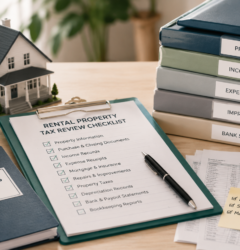
Rental Property Depreciation Red Flag Checklist
Here are practical red flags that may indicate your rental depreciation schedule should be reviewed:
- Your tax return depreciates the full purchase price without a clear land allocation.
- You made major renovations, but they do not appear on the depreciation schedule.
- You purchased appliances or furniture, but they were not separately reviewed.
- Your rental was converted from personal use, but the conversion date is unclear.
- You changed tax preparers and are not sure whether the depreciation schedule was carried over correctly.
- You own an Airbnb or furnished rental with many purchases mixed into general expenses.
- You had repairs, remodels, or improvements coded inconsistently in your bookkeeping.
- You are preparing to sell, refinance, exchange, or transfer the property.
- Your Schedule E shows depreciation, but you do not understand how it was calculated.
- You do not have a fixed asset schedule or supporting documents for improvements.
Download the Free Rental Property Tax Savings Checklist
Use our free checklist to review common rental tax savings areas, including depreciation, repairs versus improvements, bookkeeping records, and tax preparation issues.
Get the Free ChecklistWhen a Depreciation Tax Savings Review May Help
A depreciation review may be helpful if you are not sure whether your rental property depreciation was set up correctly, or if you have had major changes since you purchased the property.
A review may be especially useful when:
- You purchased a rental property and want to confirm land versus building basis.
- You made improvements, renovations, additions, or major repairs.
- You own a furnished rental, Airbnb, or short-term rental with many separate assets.
- You are preparing your rental tax return and want cleaner records.
- You are planning to sell and want to understand depreciation history.
- You are considering cost segregation and want to evaluate whether it may be worth exploring.
Small Business Accounting Inc. provides remote real estate tax and accounting services nationwide. Hawaii and Oahu clients may ask about local appointment availability when appropriate, but our rental property tax support is not limited to Hawaii.
For tax preparation support, visit our Rental Property Tax Preparation page. For a focused review of depreciation and potential tax savings areas, visit our Real Estate Depreciation Tax Savings Review page.
Frequently Asked Questions About Rental Property Depreciation Mistakes
Can I depreciate the land under my rental property?
No. Land is not depreciable. Rental property owners generally need to separate land value from building value so only the depreciable portion is included on the depreciation schedule.
What if I forgot to claim depreciation on my rental property?
Missed depreciation should be reviewed carefully. Depreciation that was allowable may still affect your adjusted basis when you sell, even if you did not claim it. Depending on the facts, correcting the issue may require additional tax analysis.
Are rental property improvements deductible right away?
Not always. Some costs may be repairs or maintenance, while others may be capital improvements that need to be depreciated over time. The correct treatment depends on the nature of the work and the facts surrounding the expense.
Do Airbnb and short-term rental properties have depreciation issues?
Yes. Airbnb and short-term rental properties often include furniture, appliances, supplies, personal-use questions, and mixed-use records. These details can affect depreciation, bookkeeping, and rental tax reporting.
Is cost segregation the same as regular depreciation?
No. Regular depreciation often treats the building as one long-life asset. Cost segregation may identify components with shorter recovery periods. A formal engineering-based study is usually prepared by a qualified third-party provider when appropriate.
How do I know if my depreciation schedule is wrong?
Common warning signs include missing land allocation, no separate assets for appliances or furniture, improvements not listed, duplicate assets, unclear placed-in-service dates, or depreciation numbers that do not match your records.
Want a Second Look at Your Rental Property Depreciation?
If you are unsure whether your rental property depreciation was set up correctly, Small Business Accounting Inc. can help review your records, identify potential red flags, and explain practical next steps based on your facts.