Church Bookkeeping: What Records Should Be Organized Before Year-End?
Church bookkeeping can feel simple during the year, especially when the focus is on ministry, worship services, outreach, and caring for the congregation. But when year-end arrives, small recordkeeping gaps can quickly turn into a stressful cleanup project.
Donation records need to be accurate. Payroll and contractor payments need to be reviewed. Restricted funds need to be tracked clearly. Board or finance committee reports need to make sense. And if QuickBooks has not been kept up throughout the year, church leaders may not feel confident in the numbers.
The goal of year-end church bookkeeping is not just to close the books. The goal is to create a clean, organized financial record that supports leadership decisions, donor communication, internal accountability, and any applicable tax or reporting requirements.
This guide walks through the key church bookkeeping records that should be organized before year-end, common mistakes to avoid, and when professional support may be helpful.
Why Church Bookkeeping Records Matter Before Year-End
Churches often operate with a combination of staff, volunteers, board members, finance committee members, and treasurers. That can be a strength, but it can also create recordkeeping challenges when different people handle donations, reimbursements, payroll, bank deposits, and financial reports.
Organized year-end records help church leaders:
- Prepare clearer financial reports for the board, elders, trustees, or finance committee
- Confirm donations were recorded properly
- Review restricted funds and designated giving
- Track ministry, mission, and outreach spending
- Support payroll and contractor reporting
- Identify bookkeeping errors before the next year begins
- Prepare for any applicable tax, payroll, or informational reporting requirements
- Improve transparency and trust with leadership and donors
Even when a church is not required to file Form 990, accurate bookkeeping still matters. Clean records support internal accountability, donor confidence, budgeting, and responsible financial stewardship.
If your church or religious organization needs help getting organized, Small Business Accounting Inc. provides nonprofit bookkeeping support for churches and nonprofit organizations that need cleanup, QuickBooks organization, board reports, restricted fund tracking, and year-end support.
First, Confirm What Type of Organization You Have
Before organizing year-end records, it is important to understand what type of church or religious organization you are working with.
The IRS generally notes that churches, some church-affiliated organizations, and certain other organizations are excepted from annual Form 990 filing. However, not every religious or church-related organization automatically has the same reporting requirements. Supporting organizations, separate nonprofit entities, ministries, schools, foundations, or affiliated organizations may have different filing or reporting obligations depending on their structure and facts.
You can review IRS information about filing requirements for churches and religious organizations and churches, integrated auxiliaries, and conventions or associations of churches.
This article is for general educational purposes and is not legal advice. Church leaders should confirm their organization’s specific filing and compliance requirements based on their structure, activities, tax year, state requirements, and facts.
Church Bookkeeping Records to Organize Before Year-End
Year-end bookkeeping is easier when the church organizes records by category. The following checklist can help church administrators, treasurers, board members, and finance committee members prepare for a cleaner close.
1. Bank Statements and Bank Reconciliations
Start with the foundation: bank accounts. Every church bank account should be reconciled through year-end.
Gather and review:
- Monthly bank statements for all checking accounts
- Monthly savings account statements
- Money market or reserve account statements
- Investment or brokerage statements, if applicable
- Copies of cleared checks when needed
- Deposit details and deposit slips
- Bank reconciliation reports from QuickBooks or your accounting system
The church should confirm that the bookkeeping records agree with the bank statements. If the books have not been reconciled regularly, year-end is the time to catch up before the next year begins.
Unreconciled accounts can cause many problems, including missing income, duplicate expenses, incorrect cash balances, and unreliable board reports.
2. Donation and Contribution Records
Donation records are one of the most important areas of church bookkeeping.
Before year-end, organize:
- Cash contribution records
- Check donations
- Online giving reports
- Credit card processor reports
- Text-to-give records, if applicable
- Donor statements or contribution summaries
- Designated giving records
- Special offering records
- Mission or building fund contributions
Donation records should be complete enough to support donor acknowledgments and internal reporting. If online giving platforms are used, those reports should be compared to bank deposits and bookkeeping records.
Churches should also be careful when donations are designated for a specific purpose. Designated giving should be tracked separately so leaders can see how much was received, how much was spent, and what balance remains.
3. Restricted Funds and Designated Fund Records
Many churches receive funds for specific purposes, such as missions, benevolence, building projects, youth ministry, scholarship funds, outreach, or special campaigns.
These funds should be organized clearly before year-end.
Review records for:
- Mission funds
- Building funds
- Benevolence funds
- Youth ministry funds
- Scholarship funds
- Memorial funds
- Special offerings
- Grant-funded ministry programs
- Board-designated reserves
The church should be able to show the beginning balance, funds received, funds spent, and ending balance for each major restricted or designated fund.
If restricted funds are mixed into general income and expenses without clear tracking, the church may need grant tracking and restricted fund bookkeeping support to create clearer reports.
4. Payroll Records and Minister Compensation
Payroll records should be reviewed before year-end so the church can identify missing information, payroll coding issues, or reporting questions early.
Organize:
- Payroll reports for the full year
- Employee wage records
- Minister compensation records
- Housing allowance documentation, if applicable
- Payroll tax filing records
- Benefit records
- Retirement plan contribution records, if applicable
- Reimbursement records
- Approved compensation or board minutes related to pay decisions
Minister compensation and housing allowance issues can be complex. This article does not provide legal or payroll tax advice. Churches should work with qualified payroll and tax professionals when reviewing clergy compensation, housing allowance, payroll tax treatment, and year-end reporting.
5. Contractor and Vendor Payment Records
Churches often pay musicians, guest speakers, maintenance workers, technology support providers, childcare workers, bookkeepers, consultants, and other service providers.
Before year-end, review:
- Vendor payment reports
- Contractor names and addresses
- W-9 forms when applicable
- Total payments by contractor
- Payments made by check, ACH, credit card, or online payment platform
- Service descriptions
This review helps the church prepare for any applicable year-end contractor reporting and helps clean up vendor records for the next year.
6. Expense Receipts and Reimbursement Records
Church reimbursements should be supported by receipts, approvals, and a clear business or ministry purpose.
Organize records for:
- Staff reimbursements
- Pastor reimbursements
- Volunteer reimbursements
- Travel and mileage
- Meals and hospitality
- Program supplies
- Office supplies
- Technology and software
- Facility repairs and maintenance
Reimbursement records should show what was purchased, who was reimbursed, why the cost was related to church activity, and whether the reimbursement was approved under the church’s policy.
7. Credit Card Statements and Supporting Receipts
If the church uses credit cards, the statements should be reconciled just like bank accounts.
For each card, review:
- Monthly credit card statements
- Receipts for charges
- Cardholder names
- Approval records
- Charges that may need reclassification
- Personal or unclear charges that need follow-up
Credit card cleanup is often one of the fastest ways to improve the accuracy of church financial reports.
8. Ministry, Program, and Outreach Records
Church leaders often want to understand how much was spent on ministries, outreach, missions, worship, youth programs, small groups, events, and community support.
If the church tracks activity by ministry or program, year-end is a good time to review whether transactions were coded consistently.
Helpful records may include:
- Program budgets
- Ministry spending reports
- Event income and expense summaries
- Mission trip records
- Outreach program records
- Scholarship or assistance records
- Grant reports, if applicable
Good ministry reporting helps leadership understand how resources are being used and whether spending aligns with the church’s priorities.
9. Board or Finance Committee Reports
Before year-end, review the reports given to the board, elders, trustees, or finance committee during the year.
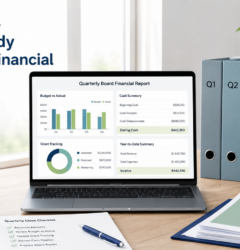
A board-ready church financial packet may include:
- Statement of financial position
- Statement of activities
- Budget-to-actual report
- Cash balance summary
- Restricted fund or designated fund report
- Notes explaining major changes or unusual transactions
Board financial reports are generally for internal management and board use unless otherwise agreed. They are not the same as CPA audit, review, or compilation reports.
If the church’s reports are hard to understand or inconsistent from month to month, board financial report support can help create a more usable reporting process.
10. QuickBooks or Accounting System Cleanup Items
If your church uses QuickBooks, review the accounting file before year-end.
Look for:
- Uncategorized income
- Uncategorized expenses
- Old uncleared checks
- Duplicate transactions
- Negative fund balances
- Inactive accounts that should be cleaned up
- Vendor or donor names entered inconsistently
- Bank feeds with unreviewed transactions
- Accounts that do not agree with statements
A nonprofit QuickBooks cleanup can help churches clean up old records, improve categories, reconcile accounts, and create reports that are easier for leaders to review.
Common Church Bookkeeping Mistakes to Avoid
Church bookkeeping errors are often unintentional. They usually happen because volunteers and staff are busy, systems are informal, or bookkeeping duties change hands over time.
Mixing Restricted and General Funds
Designated or restricted funds should not be treated the same as general operating income. If a church receives funds for a specific purpose, the records should show how those funds were used.
Waiting Until Year-End to Reconcile Accounts
Monthly reconciliation is much easier than trying to reconcile a full year at once. Waiting until year-end can make it harder to identify missing or duplicate transactions.
Relying Only on Bank Balances
A bank balance does not tell the full financial story. Some cash may be restricted, some expenses may not have cleared, and some liabilities may not yet be recorded.
Using Too Many Miscellaneous Categories
Large balances in “miscellaneous,” “uncategorized,” or “other” accounts make reports less useful. These items should be reviewed and reclassified before year-end.
Not Keeping Support for Reimbursements
Reimbursements should be supported by receipts, approvals, and a clear ministry or business purpose. Weak documentation can create confusion later.
Red Flags Your Church Bookkeeping Needs Cleanup
Your church may need bookkeeping cleanup if any of these issues sound familiar:
- Bank accounts have not been reconciled monthly
- QuickBooks does not match bank statements
- Donation reports do not match deposits
- Restricted or designated funds are unclear
- Board reports are late or confusing
- There are large uncategorized income or expense balances
- Payroll records are difficult to review
- Contractor payments have not been summarized
- Credit card receipts are missing
- Ministry or program spending is hard to track
- The treasurer or administrator is unsure how to explain the reports
These issues do not mean the church has done something wrong. They simply mean the bookkeeping system may need to be cleaned up and improved before the next year begins.
What About Form 990 for Churches?
Many churches are excepted from annual Form 990 filing, but church-related organizations should not assume the rules are the same for every entity. Some church-affiliated organizations, supporting organizations, schools, ministries, foundations, or separately organized nonprofits may have different filing requirements.
The IRS provides guidance on filing requirements for churches and religious organizations, as well as information about churches, integrated auxiliaries, and conventions or associations of churches. Because requirements can vary based on structure and facts, church leaders should confirm their specific situation with current IRS guidance and a qualified tax professional.
If a related nonprofit does have an annual filing requirement, clean bookkeeping can help support Form 990 support, board reporting, and year-end review.
When to Get Professional Help
Some churches can handle bookkeeping internally, especially when activity is simple and records are organized. But professional support may be helpful when the church has multiple funds, payroll, online giving, credit cards, grants, ministries, or year-end cleanup issues.
Consider getting help if:
- The books are behind
- QuickBooks needs cleanup
- Restricted or designated funds are unclear
- Donation records do not match deposits
- Payroll or contractor records need review
- The board needs clearer financial reports
- The church has grants or special purpose funds
- Year-end reporting is becoming stressful
- The treasurer or administrator has changed during the year
The right support can help your church clean up past records, organize current year activity, and create a better monthly bookkeeping process going forward.
FAQ: Church Bookkeeping Records
1. What records should a church organize before year-end?
A church should organize bank statements, reconciliations, donation records, payroll records, contractor payments, restricted fund records, credit card receipts, reimbursement records, and board financial reports before year-end.
2. Do churches need to file Form 990?
Many churches are excepted from annual Form 990 filing, but related organizations may have different requirements depending on their structure and facts. Church leaders should confirm their specific situation using current IRS guidance and professional advice when needed.
3. How should churches track restricted or designated funds?
Churches should track restricted or designated funds by purpose, beginning balance, funds received, funds spent, and remaining balance. This helps leaders understand which funds are available for general operations and which are limited to specific uses.
4. Can QuickBooks be used for church bookkeeping?
Yes. QuickBooks can be used for church bookkeeping, but it should be set up carefully so donations, ministries, restricted funds, payroll, and reports are organized in a way that supports church leadership and finance review.
5. When should a church get bookkeeping cleanup help?
A church should consider cleanup help when accounts are not reconciled, donation records do not match deposits, restricted funds are unclear, reports are hard to understand, or year-end records are not organized.
Need Help Getting Your Nonprofit Books Organized?
Small Business Accounting Inc. helps nonprofits with bookkeeping cleanup, QuickBooks Online organization, board financial reports, grant tracking, restricted fund bookkeeping, and Form 990 support.
Remote support is available nationwide. Hawaii and Oahu clients may request local appointment availability when appropriate.
Learn more about nonprofit bookkeeping services or contact Small Business Accounting Inc. to get started.